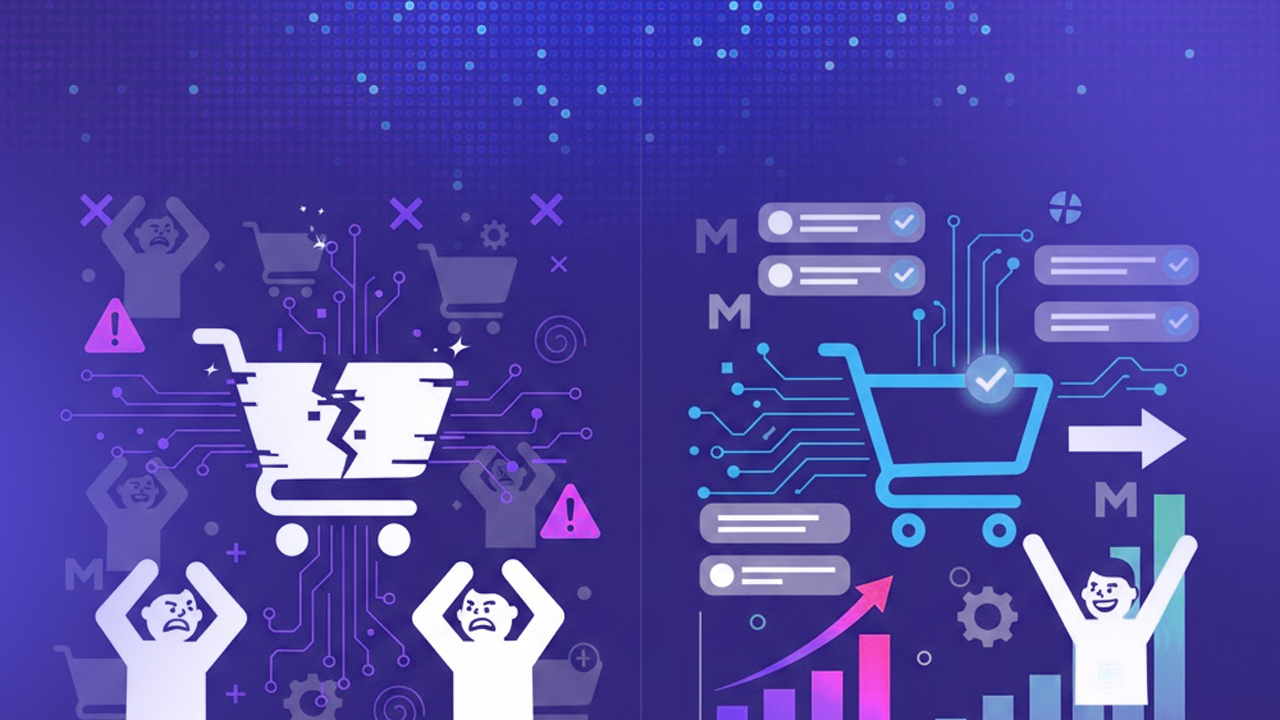


AI and machine learning in ecommerce are changing how B2B stores on Magento work. The goal isn’t just automation; it’s accuracy, faster decision-making, and fewer manual steps across sales, quoting, and catalog operations.
Most B2B platforms already have data. The real problem is using it right — predicting what buyers need, improving search results, and keeping inventory balanced. Magento’s open structure makes that possible without losing control over how your data moves between systems.
According to Gartner, 60% of B2B leaders plan to invest in AI-driven process automation and buyer intelligence this year. That’s because AI now plays a direct role in margins, not just marketing.
ON THIS PAGE
What makes Magento B2B different from B2C, and why AI must adapt
Magento B2B runs on a structure where buyers log in to reorder, create quotes, or validate pricing.
AI has to understand that context.
Unlike B2C, Magento B2B sites deal with:
- Account hierarchies with different permissions.
- Contract-based pricing and credit terms.
- Bulk orders that need approval before checkout.
- High SKU counts where mapping errors break the flow.
Generic retail AI doesn’t handle this well. Models for B2B Magento development have to learn from role-based data, like what the buyer’s function is, not just what page they viewed.
Key AI/ML use cases for Magento B2B
Each of these areas shows how Magento machine learning can create real business value.
1. AI-powered Search & Discovery
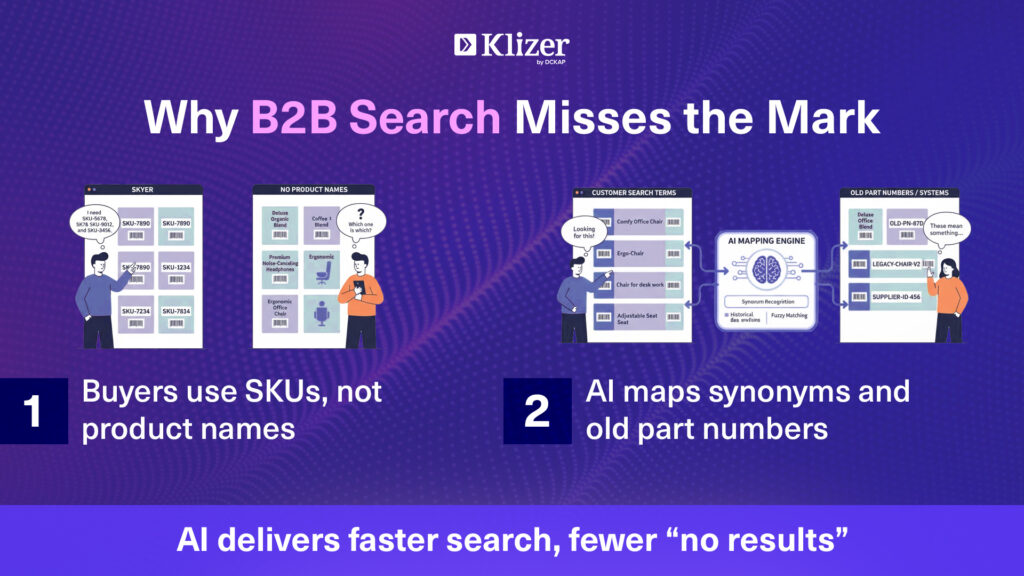
Search drives the first impression. For B2B, it’s more about accuracy than keywords. Buyers type half SKUs, internal part numbers, or abbreviations. AI-based search fixes that.
Machine learning models read past searches and map product relevance by behavior, not by match. It can also group SKUs with near-identical specs.
For example, according to Adobe Commerce Insights, a construction supplier improved search-to-purchase conversions by 27% after adopting semantic search in Magento.
2. Personalized product & catalog recommendations for corporate buyers
For B2B, personalization means relevance by company, not by user. AI analyzes order history, spend category, and reorder intervals to show the right items for that business account.
Buyers see their approved products, their price tiers, and logical add-ons.
According to Forrester, brands using AI-driven product recommendations saw up to 35% higher reorder rates.
3. Automated quoting and CPQ assistance
According to McKinsey, B2B sellers using automated quote prediction tools cut quoting time by 60% and raised acceptance rates by 20%.
Quoting is time-consuming, but AI can make it faster and more consistent.
Machine learning can read historic quotes, accepted discounts, and margin patterns. It then suggests relevant line items or price ranges before the sales rep even starts typing.
Adobe Commerce APIs can link this logic to existing quote modules.
4. Smart checkout & approval workflows
Checkout is rarely one click in B2B. AI can help simplify it without losing control.
It predicts what might delay approvals, like incomplete POs, risky payment terms, or large orders that need multi-step verification.
AI systems can route high-value orders to senior approvers or recommend credit terms based on account reliability.
5. Demand forecasting & inventory optimization
Predicting demand is tough when orders fluctuate across seasons or accounts.
Machine learning handles this better than rule-based logic. It learns from order frequency, lead times, and supplier data to suggest stock thresholds.
6. Dynamic & negotiated pricing models
Pricing flexibility is core to B2B. AI helps maintain that balance between margin and competitiveness.
Machine learning can predict optimal prices using past negotiations, market movement, and customer loyalty.
It can also alert account managers when a proposed price breaks historical margins.
7. AI customer service: chatbots + intent routing for account managers
AI-driven routing reduces first-response time by 40% for enterprise accounts.
AI chatbots in Magento aren’t just for FAQs. They can understand complex intents like checking credit status, PO tracking, or quote follow-ups, and forward them to the right team.
When integrated with CRM and ERP, they create a complete loop: query, lookup, response, escalation.
8. Visual search & SKU recognition (images/CAD/part images)
In industries like electrical or automotive, buyers may not know the part number. They upload an image or CAD file instead.
Visual AI can match it to existing SKUs, even with partial image quality.
Magento machine learning models can process this using vector search or pre-trained vision APIs.
9. Fraud detection & returns optimization
Magento B2B stores using adaptive fraud detection tools reported a 30% drop in chargebacks. AI models can catch fraud patterns faster than manual checks. They learn from buyer activity, payment anomalies, and return behaviors.
Data requirements, privacy & compliance (GDPR, CCPA, industry rules)
AI in ecommerce is only as good as its data. Magento B2B teams should track:
- What data is collected (transactional, behavioral, contract)?
- Where it’s stored and processed.
- How long has it been retained?
For GDPR and CCPA, buyers must have control over what’s tracked. Sensitive pricing or quote data should be pseudonymized before training models. Keep audit logs for every automated price or quote change. Adobe Commerce supports this with secure APIs and role-based access to model outputs.
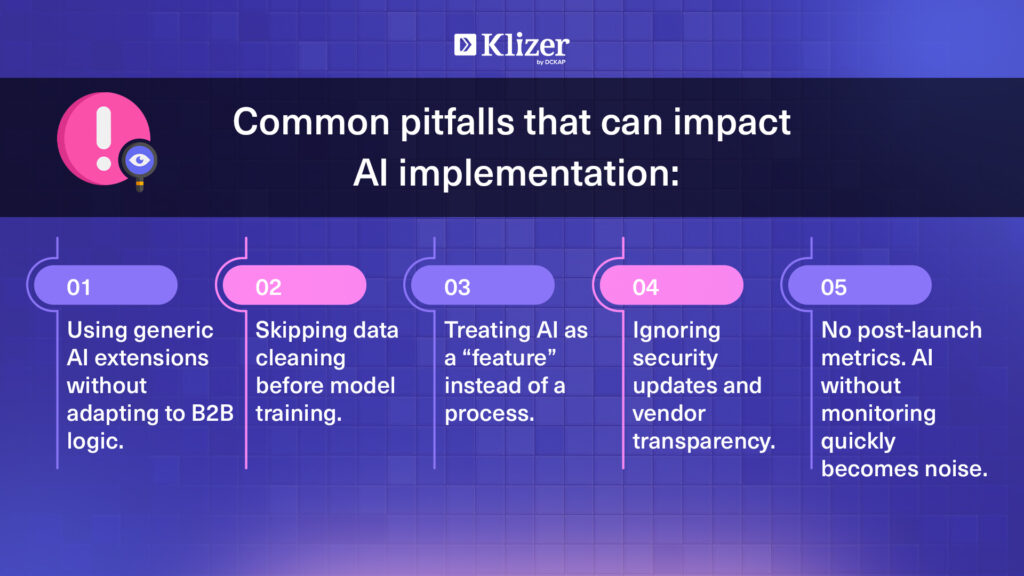
Security & risk management (Magento-specific)
AI models add another attack surface. They integrate deep into pricing, checkout, and order systems. Every AI module or extension should go through:
- Source review before production.
- Patch updates from trusted vendors.
- Pen tests to check exposed endpoints.
Adobe’s 2025 advisory (APSB25-94) shows how fast vulnerabilities appear. Regular updates aren’t optional. Any B2B Magento development roadmap should include ongoing security scans, especially when AI modules use external APIs.
Implementation roadmap
AI for Magento B2B is built in layers. Brands should generally start small, measure regularly, and scale with growth.
- Phase 0: Discovery & data audit: Check what data you already have: product metadata, buyer logs, quotes, and pricing tables.
- Phase 1: MVP: Implement personalized recommendations, semantic search, and automated PO parsing. Set clear metrics for conversion from search, quoting time, or repeat order rate.
- Phase 2: Scale: Move into real-time personalization, demand forecasting, and AI-assisted CPQ. This is where models connect directly to ERP and CRM.
Keep your team balanced. Generally, you would need a data engineer, ML developer, QA, and an ecommerce strategist. You can also hire an AI development company or a Magento development company so that you have access to the expertise. Run pilots, measure ROI, and expand.
Conclusion
AI in B2B ecommerce isn’t only about automation. It gives you better control with cleaner operations, faster quoting, and more predictable demand. Magento and Adobe Commerce give teams the structure to build AI models that actually align with how B2B works.
If you’re exploring more on AI Ecommerce Solutions & development for your Magento store, Klizer builds and integrates them natively within the Magento store.