
The holiday season is when your ecommerce store should be making money, not losing it due to technical issues. Yet every year, we see ecommerce websites crash, slow to a crawl, or even go completely offline—right when customers are ready to buy. This isn’t just annoying—it’s costly.
In fact, in 2024:
- Unplanned downtime hit most organizations—82% of businesses faced unexpected downtime in recent years.
- Slow site speed also kills conversion—a 1‑second faster load time increases conversion by 5.6%, and sites that load in 1 second convert up to 5× more than those loading in 10 seconds (Source).
That’s why getting ahead of crashes, outages, and lags before the holiday surge matters.
ON THIS PAGE
How to Prepare Your Online Store for the Holiday Rush (Without Crashing)
1. Communicate Fast When There’s a Problem
If your ecommerce website crashes, your first move: notify customers. Whether it’s email, SMS, or a banner, explain the issue, name the error (like website server error or website unavailable), and tell them the steps you’re taking to fix it.Studies show that every minute of downtime during busy sales can cost a retailer thousands—or even tens of millions of dollars. A transparent urgent site outage notification plan helps calm frustration and manage expectations.
2. Don’t Ignore Slow Loading Issues
You won’t always see a full crash. Instead, pages that load slow or lag during checkout can send customers elsewhere. 63% of shoppers bounce if a site takes more than 4 seconds to load; at 6 seconds, two‑thirds leave.
A fast site isn’t a bonus—it’s essential. Tools like load testing, image compression, and server scaling are crucial. Even a 0.1 second improvement on mobile can raise conversions by over 8% and boost add‑to‑cart rates by around 9%.
Be clear with users: if your ecommerce site performance lags, show a banner like “We’re aware of delays and improving speed.”
3. Recover Customer Trust With a Thoughtful Apology
When downtime or slow speeds hit, don’t just fix it and move on. Send an ecommerce apology email with a meaningful website downtime compensation—maybe a discount code or free shipping. Customers may forgive faster if you act thoughtfully.
Remember: research shows 32% of shoppers never return after just one bad experience, and 65% trust a brand less after a technical issue. A recovery offer goes a long way.
4. Educate Your Customers (and Your Team) About Site Speed
Explain why site speed matters—not just to hedge guilt, but to show you care about their experience. Blog posts, emails, or banners can explain your efforts: speed optimizations, checkout upgrades, and caching improvements.
Share that a load speed boost can lift conversion rate noticeably: NitroPack reported Rakuten 24 gained 33% more conversions and 15% higher average order value, while OfficeRnD improved conversion by 10% after optimizing page speeds in 2024.
This kind of transparency educates customers and helps them stay patient when things get busy.
5. Reassure Customers That Their Data Is Safe
Big outages make people worry—what if their credit card info was compromised during a crash? Don’t leave that unsaid. Clearly state your commitment to secure checkout, customer data protection, and that no data was at risk during the issue.
Including a short line like, “No customer data was compromised” is often enough to maintain trust and differentiate you from competitors.
6. Schedule Maintenance—And Communicate It
Sometimes downtime is necessary—and even good—if planned for upgrades or server scaling ahead of the holiday rush. The key: let people know.
Send out maintenance notifications in advance. Tell customers the date/time, expected improvements (like faster loading or upgraded checkout), and how long the planned downtime will last. That way you don’t surprise them, and you frame it as a benefit.

Also read- The Ultimate Guide To Ecommerce Performance Testing
Final Thoughts
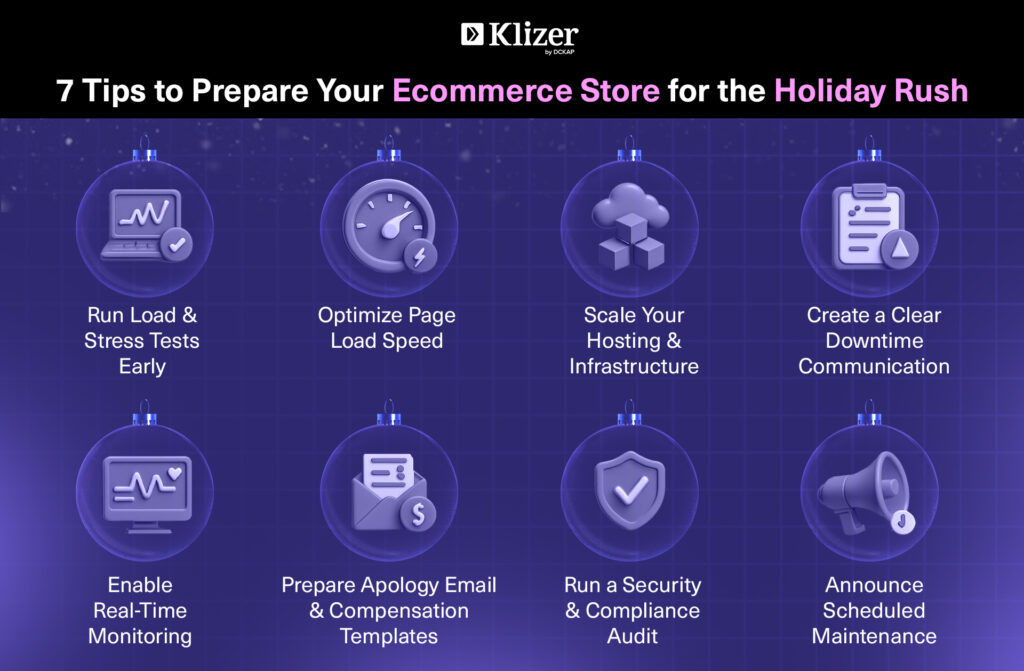
The holidays are stressful enough without worrying about an online store crash, slow checkout, or vanishing pages. And yet, with the right planning, you can avoid most of it—and protect your bottom line. Here is a checklist you can use:
- Have a solid urgent notification plan for site outages
- Fix performance issues proactively—don’t wait for a slowdown
- Follow up with a sincere apology email and offer
- Educate customers about your speed optimization efforts
- Reassure them of a strong ecommerce website security
- Communicate scheduled maintenance clearly ahead of time
That’s how you turn potential holiday season disasters into smooth shopping experiences. A fast, reliable site keeps sales flowing—and customers happy.For expert help with ecommerce performance & ecommerce Development, readiness, and platform optimization, contact us now!