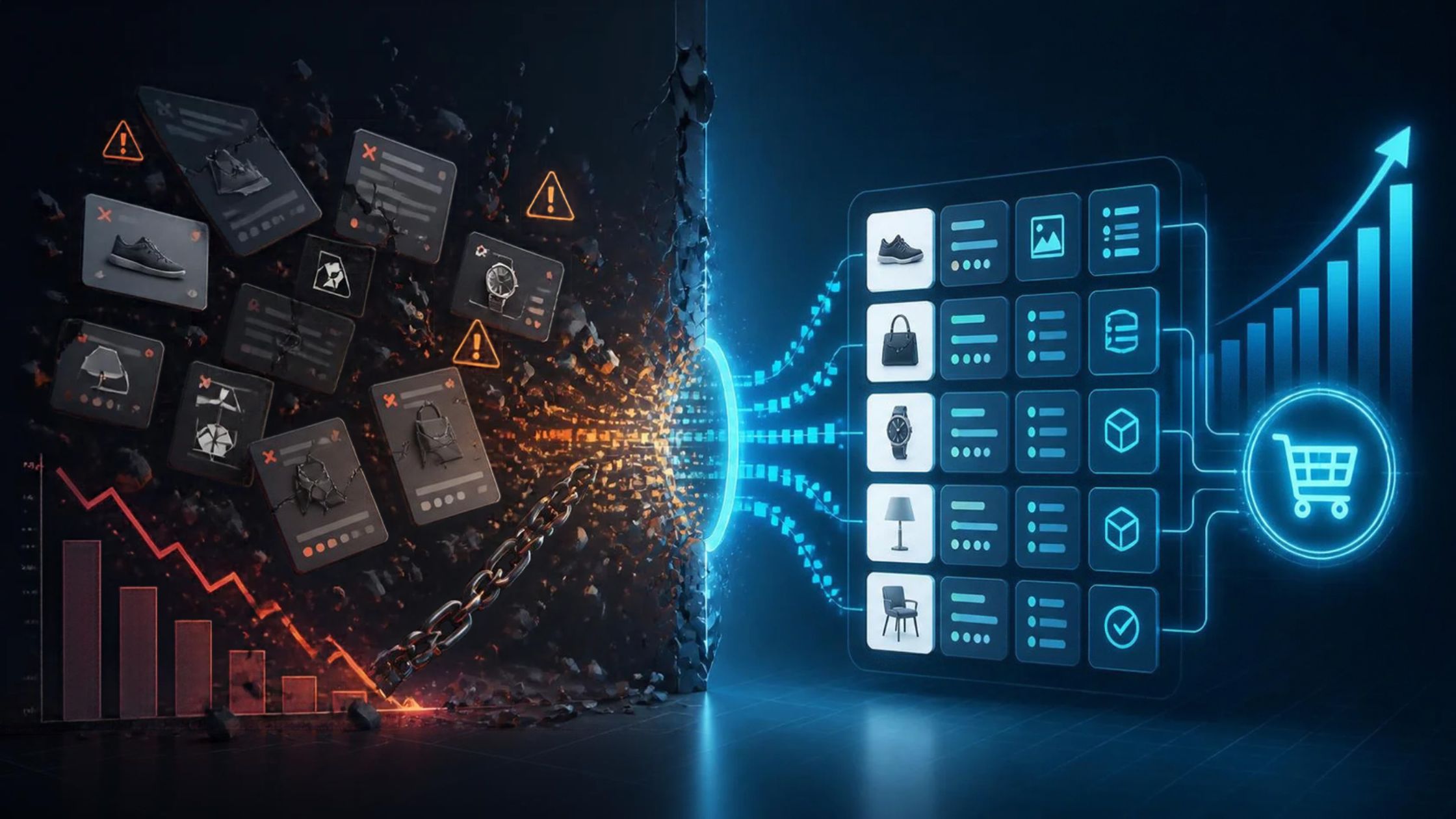

The B2B eCommerce landscape is rapidly evolving. Traditional online catalogs, once used as simple digital product lists, are no longer sufficient for modern business buyers. Today’s procurement teams expect the same seamless, intelligent, and personalized experiences in B2B purchasing that they receive on B2C platforms. They demand faster procurement, relevant product recommendations, dynamic pricing, and buying journeys tailored to their specific industry and purchasing behavior.
Hyper-personalization in B2B eCommerce is the practice of using artificial intelligence (AI), real-time customer data, behavioral analytics, and automation to deliver fully individualized buying experiences to each customer or account. Unlike traditional personalization, which might display a customer’s name or suggest related products, hyper-personalization tailors the entire storefront including pricing, catalogs, workflows, and recommendations based on who the buyer is and how they behave.
Shopware has emerged as a leading platform enabling B2B enterprises to move beyond static catalogs and build intelligent, AI-driven commerce ecosystems. Its flexible architecture, API-first design, and advanced customization capabilities allow organizations to deliver personalized digital experiences that improve customer satisfaction, increase conversions, and strengthen long-term client relationships.
This blog explores how hyper-personalization is transforming B2B commerce, where static catalogs fall short, and how Shopware enables next-generation AI-powered buying experiences.
ON THIS PAGE
What Are the Limitations of Traditional Static B2B Catalogs?
For many years, B2B commerce platforms relied on static catalogs: digital storefronts that displayed the same products, pricing, and content to every customer, regardless of their preferences, industry, purchase history, or business requirements.
While static catalogs simplified product management, they created four significant challenges:
1. No Personalized Experience: Modern buyers expect relevant recommendations and tailored experiences. Static catalogs cannot interpret customer intent or purchasing patterns, resulting in generic browsing that fails to engage buyers.
2. Poor Product Discovery: B2B businesses often manage thousands of products with complex technical specifications, variants, and bulk pricing structures. Without intelligent search or personalization, customers struggle to find the right products quickly.
3. Inefficient Sales Processes: Sales teams spend significant time manually guiding customers, answering repetitive questions, and handling customized pricing requests that could otherwise be automated.
4. Lower Customer Retention: When every buyer receives the same experience, there is little differentiation. Businesses risk losing customers to competitors offering smarter, more convenient purchasing journeys.
As customer expectations change, static catalogs are becoming obsolete. Businesses now require adaptive commerce systems that learn from customer behavior and deliver contextual experiences in real time.
What is Hyper-Personalization in B2B Commerce?
Hyper-personalization goes beyond traditional personalization techniques. It analyzes real-time data, AI insights, and behavioral patterns to create fully customized buyer journeys at scale.
In B2B commerce, hyper-personalization can include:
- Personalized product catalogs
- Customer-specific pricing
- AI-driven product recommendations
- Dynamic search results
- Customized promotions
- Predictive inventory suggestions
- Automated reorder recommendations
- Industry-specific content and workflows
For example, a manufacturing company purchasing industrial tools may see different pricing, recommended accessories, and procurement workflows compared to a healthcare organization purchasing medical equipment. This level of intelligence creates faster purchasing decisions, stronger customer engagement, and more durable business relationships.
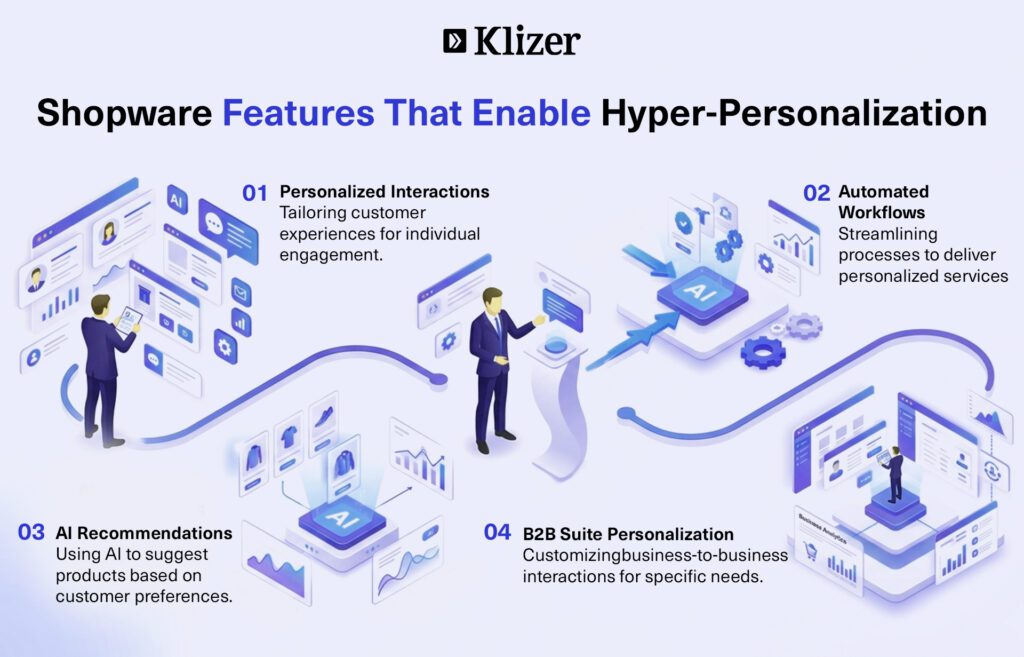
How Does Shopware Enable AI-Driven B2B Buying Experiences?
1. Flexible API-First Architecture
One of Shopware’s core strengths is its API-first architecture, which allows businesses to integrate AI engines, CRM systems, ERP platforms, analytics tools, and customer databases without friction.
By connecting multiple data sources, Shopware helps organizations build a unified customer view that supports advanced personalization strategies:
- ERP integration enables customer-specific pricing
- CRM integration provides sales history insights
- AI engines analyze browsing and purchasing behavior
- Marketing automation tools deliver targeted campaigns
This interconnected ecosystem creates intelligent and responsive commerce experiences.
2. AI-Powered Product Recommendations
AI-driven recommendations are transforming B2B purchasing. Instead of manually browsing extensive catalogs, customers receive intelligent product suggestions based on previous purchases, frequently bought combinations, industry trends, seasonal demand, and behavioral patterns.
With Shopware, businesses can implement recommendation engines that improve upselling and cross-selling opportunities while simplifying procurement. For example, if a customer regularly purchases industrial machinery, the platform can automatically recommend compatible spare parts, maintenance kits, or consumables. This reduces friction and increases average order value.
Read more: How AI improves shopping experience
3. Personalized Pricing and Catalogs
B2B pricing structures are often complex. Different customers may have unique pricing agreements, contract terms, volume discounts, or restricted product visibility.
Shopware allows businesses to configure:
- Customer-specific catalogs
- Tiered pricing structures
- Role-based access controls
- Region-specific product visibility
- Contract-based purchasing experiences
Each buyer sees only the products, pricing, and offers relevant to their specific business relationship, which improves efficiency and builds trust between suppliers and customers.
4. Smart Search and Product Discovery
Search functionality plays a critical role in B2B commerce. Buyers need fast access to technical products, specifications, and bulk ordering options.
AI-enhanced search within Shopware helps customers discover products through natural language queries, predictive search suggestions, synonym recognition, behavioral ranking, and intelligent filtering. Instead of browsing hundreds of pages, buyers can quickly locate products that match their exact requirements. Improved search experiences directly contribute to higher conversion rates and customer satisfaction.
5. Automation and Predictive Commerce
Hyper-personalization also enables predictive commerce capabilities. By analyzing historical data and purchasing patterns, businesses can automate repetitive tasks and anticipate customer needs before they arise.
Using Shopware, companies can:
- Send automated reorder reminders
- Predict inventory demand
- Offer replenishment subscriptions
- Trigger personalized promotions
- Recommend frequently reordered products
This proactive approach simplifies procurement and improves operational efficiency for both buyers and suppliers.
Explore our Shopware development services.
What Are the Benefits of Hyper-Personalization in B2B Commerce?
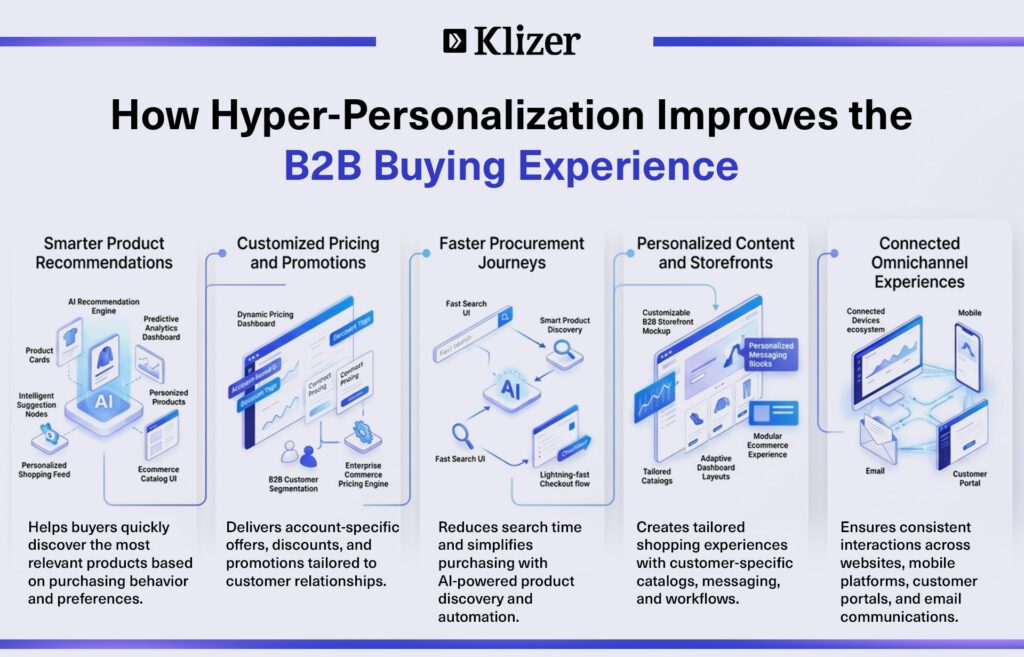
- Improved Customer Experience: Personalized experiences reduce friction and make purchasing faster. Customers gain quick access to relevant products, pricing, and recommendations tailored to their needs.
- Higher Conversion Rates: AI-driven recommendations and intelligent product discovery increase the likelihood of purchases and support larger order values.
- Stronger Customer Loyalty: Businesses that consistently deliver customized experiences build stronger, longer-lasting relationships with their buyers.
- Better Operational Efficiency: Automation reduces manual workloads for sales and support teams, allowing businesses to scale without proportionally increasing overhead.
Competitive Advantage: Companies using hyper-personalization stand out in competitive markets by offering faster, smarter, and more convenient buying journeys that generic platforms cannot replicate.
The Future of AI-Driven B2B Commerce
The future of B2B commerce will increasingly depend on AI and data-driven decision-making. Buyers expect digital platforms to understand their needs, predict their purchasing behavior, and simplify complex procurement processes.
Emerging technologies including generative AI, predictive analytics, conversational commerce, and intelligent automation will continue to reshape how B2B buying experiences are designed and delivered.
Shopware’s flexible and scalable ecosystem positions businesses to adapt quickly to these innovations. Organizations that invest in hyper-personalization today will be better prepared for the next generation of digital commerce.
Conclusion
The era of static B2B catalogs is ending. Modern buyers demand intelligent, personalized, and efficient digital experiences that align with their business needs and purchasing behavior.
Hyper-personalization powered by AI enables smarter product discovery, tailored pricing, predictive recommendations, and automated procurement journeys. Shopware provides the technological foundation required to build these advanced commerce experiences. Its API-first architecture, AI integration capabilities, and flexible customization features make it a strong solution for organizations looking to modernize their B2B operations.
Businesses that embrace AI-driven personalization will gain a measurable advantage through improved customer satisfaction, stronger loyalty, and higher revenue growth. The future of B2B commerce is no longer about simply listing products online. It is about delivering intelligent buying experiences that understand customers, anticipate their needs, and create long-term value.
For expert help on hyper-personalization for your Shopware store, reach out to our experts now!
Frequently Asked Questions
How does Shopware support AI-driven personalization for B2B businesses?
Shopware supports AI-driven personalization through its API-first architecture, flexible customization capabilities, and seamless integrations with ERP, CRM, analytics, and AI tools. Businesses can create customer-specific catalogs, dynamic pricing models, intelligent product recommendations, and predictive purchasing experiences.
Why are static B2B catalogs no longer effective?
Static B2B catalogs provide the same products, pricing, and content to every buyer, regardless of their needs or purchase history. Modern B2B buyers expect faster product discovery, personalized recommendations, and streamlined procurement workflows. Static catalogs often lead to poor user experiences, slower purchasing decisions, and lower customer retention.
What are the benefits of hyper-personalization in B2B commerce?
Hyper-personalization helps B2B businesses improve customer experience, increase conversion rates, strengthen customer loyalty, and automate repetitive sales processes. AI-powered recommendations and personalized catalogs also improve upselling opportunities, operational efficiency, and long-term revenue growth.
Can Shopware deliver customer-specific pricing and catalogs?
Yes. Shopware allows businesses to create customer-specific pricing structures, personalized product catalogs, role-based access controls, contract pricing, and region-specific product visibility. This ensures each buyer sees only the products and pricing relevant to their account.
How does AI improve product discovery in B2B eCommerce?
AI improves B2B product discovery through intelligent search, predictive suggestions, behavioral ranking, natural language queries, and personalized recommendations. Buyers can quickly find relevant products, technical specifications, and compatible items without manually navigating large catalogs.
What industries benefit most from AI-powered B2B personalization?
Industries with complex catalogs, recurring procurement cycles, and customer-specific pricing benefit significantly from AI-powered personalization. This includes manufacturing, healthcare, industrial distribution, automotive, electronics, wholesale, and medical supply businesses.