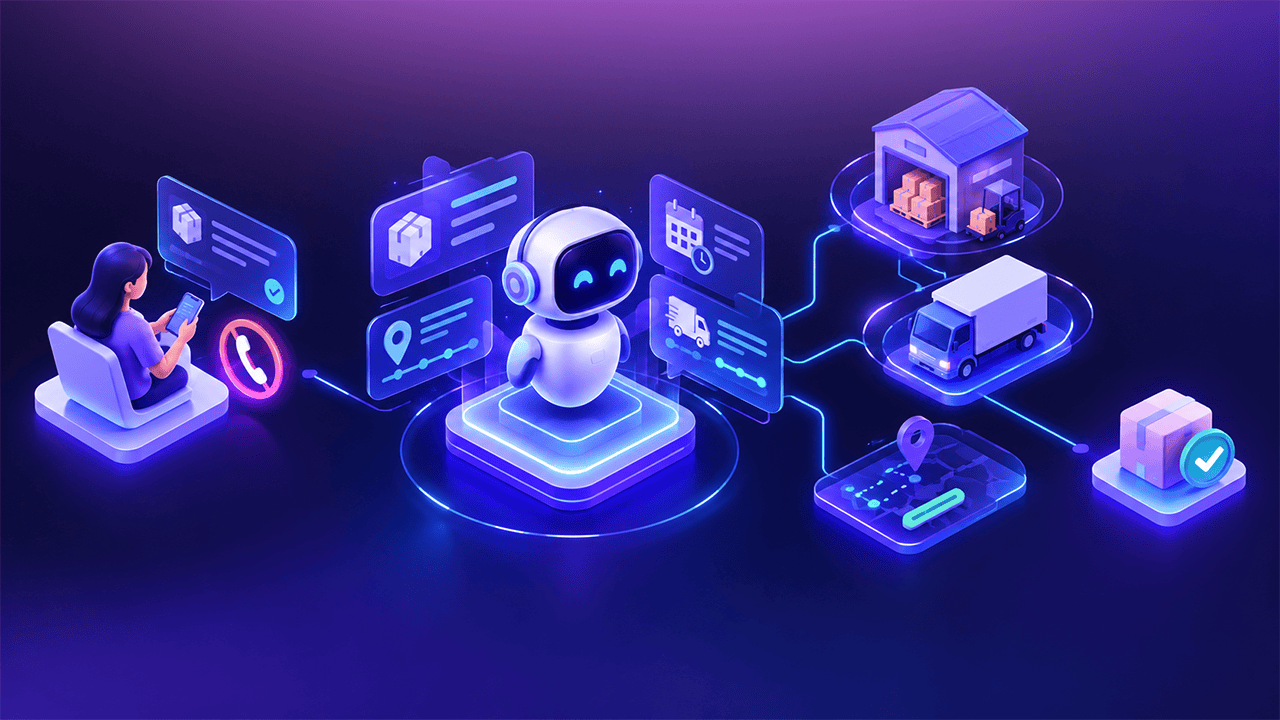

Order tracking is a common source of repetitive customer support requests. Customers frequently contact support for basic updates such as shipment status, delivery dates, tracking numbers, and delays, even when the underlying information already exists in commerce, ERP, order management, or carrier systems. This requires support teams to spend valuable time retrieving and communicating information that automation could deliver.
An order tracking chatbot uses AI to connect customer conversations with verified order and shipment data, enabling buyers to access relevant updates without calling or messaging a support agent. For manufacturers and distributors, where order processes often span multiple systems and complex fulfillment workflows, maintaining reliable order visibility across the customer journey can be challenging.
ON THIS PAGE
How Does an Order Tracking Chatbot Automate Order Updates?
AI automates order tracking by interpreting customer requests, accessing verified order data, and acting on shipment events. The workflow combines data retrieval, shipment analysis, and automated communication.
Captures Order Details
AI can extract order numbers, tracking numbers, product details, and shipment dates from structured records and business documents.
Retrieves Relevant Records
AI identifies and retrieves the order or shipment records needed to process the customer’s request from connected business systems.
Standardizes Shipment Statuses
AI can interpret different carrier codes and map them to consistent statuses such as Shipped, In Transit, Out for Delivery, Delivered, or Delayed.
Flags Potential Delays
AI can analyze shipment events and available historical data to identify patterns that may signal a potential delivery issue.
Sends Proactive Notifications
Businesses can configure automated email, SMS, or WhatsApp notifications for defined shipment milestones, status changes, or delivery exceptions.
Routes Unresolved Issues
When required data is unavailable or an issue needs investigation, the chatbot can route the request to a support representative with the relevant order context.
What Order Tracking Queries Can AI Handle?
An AI-powered order tracking chatbot can handle routine post-purchase questions by retrieving verified information from connected order, shipment, and carrier records.
What Is the Current Status of My Order?
AI can retrieve the latest recorded order status, such as Processing, Packed, Shipped, In Transit, Out for Delivery, or Delivered, and present the information in a clear response.
Where Is My Tracking Number?
The chatbot can locate the tracking number associated with an order and provide the relevant carrier details when those records are available.
When Will My Order Arrive?
AI can provide the estimated delivery date or delivery window recorded in the order or carrier system. It can also communicate a revised estimate when updated shipment information becomes available.
Has My Shipment Been Delayed?
The chatbot can provide the latest shipment status and any recorded delivery exception associated with the order.
Why Hasn’t My Tracking Information Updated?
When no new tracking event appears within the expected timeframe, AI can provide the latest recorded status and identify any available shipment exception or update.
My Order Shows as Delivered, but I Haven’t Received It. What Should I Do?
AI can provide the available delivery details and guide the customer through the configured next steps.
Can I Track Multiple Shipments From One Order?
For split orders or multi-package shipments, the chatbot can present the available tracking details for each shipment when the connected systems maintain separate shipment records.
What Are the Benefits of Automating Order Tracking With AI?
An order tracking chatbot can reduce repetitive support work, improve self-service access to order information, and provide operational insights for manufacturers and distributors.
Reduces Routine Support Work
AI can handle common order-tracking inquiries without requiring agents to retrieve and communicate shipment information manually. Support teams can then focus on cases that require investigation or human judgment.
Improves Access to Order Information
Customers can access available order and shipment information without waiting for manual support responses. This makes post-purchase information easier to access throughout the customer journey.
Supports Carrier Performance Analysis
Tracking data can reveal recurring delays, missed shipment events, and differences in carrier performance. Businesses can use these insights to evaluate delivery partners and improve fulfillment decisions.
How Does an Order Tracking Chatbot Integrate With eCommerce and ERP Systems?
An order tracking chatbot sits within the existing commerce architecture rather than operating as a standalone application. A Connected Commerce approach links the customer-facing experience with the systems that support order and fulfillment operations.
ERP Connectivity
For B2B manufacturers and distributors, ERP systems such as Epicor Prophet 21 and Epicor ERP can contain critical operational records that support the order lifecycle. ERP integration for B2B ecommerce connects these records with the customer-facing commerce experience, helping maintain consistent order information across business systems. A Prophet 21 integration guide covers data mapping, failures, and monitoring in more detail.
Data Ownership and Synchronization
Different systems may own different parts of an order record. The ecommerce platform may manage the storefront order, while the ERP or order management system maintains operational data. Clear data ownership and reliable synchronization help prevent conflicting records from reaching the customer-facing layer.
eCommerce Platform Connectivity
Platforms such as Magento, Adobe Commerce, Shopify Plus, BigCommerce, and Shopware can provide customer and order records to the tracking solution. Official Adobe Commerce APIs and the Shopify Order API provide mechanisms for accessing and working with order information within connected commerce environments. For businesses running Magento, Magento ERP integration helps connect storefront data with downstream operational systems.
Multi-System Order Architecture
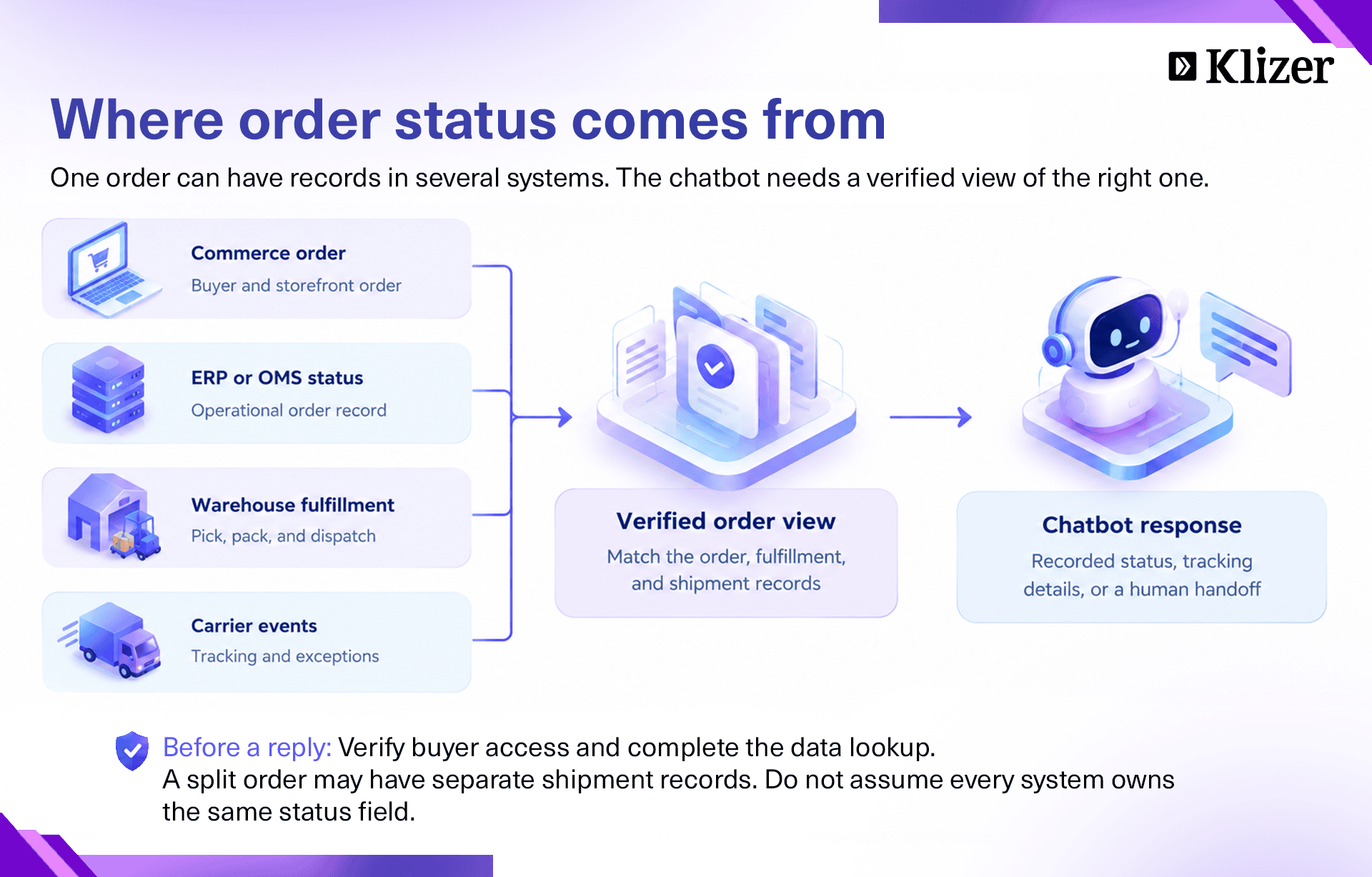
Complex orders may span multiple warehouses, fulfillment locations, backorders, partial shipments, and carriers. The integration architecture must preserve the relationship between the original order, fulfillment records, and shipment events so that connected systems maintain a consistent transaction record.
What Should Businesses Consider Before Implementing an Order Tracking Chatbot?
Businesses should evaluate the data, security, integrations, and operational workflows behind an order tracking chatbot before deployment.
Data Quality and Availability
The chatbot needs accurate, current order and shipment data from connected systems. Incomplete records or outdated information can lead to incorrect tracking responses.
Security and Authentication
Authentication and access controls should verify customers before the chatbot reveals order details. Role-based permissions should also restrict access to authorized data.
Integration Reliability
The solution should account for API availability, synchronization failures, inconsistent data, and fallback processes across connected systems.
Exception Governance
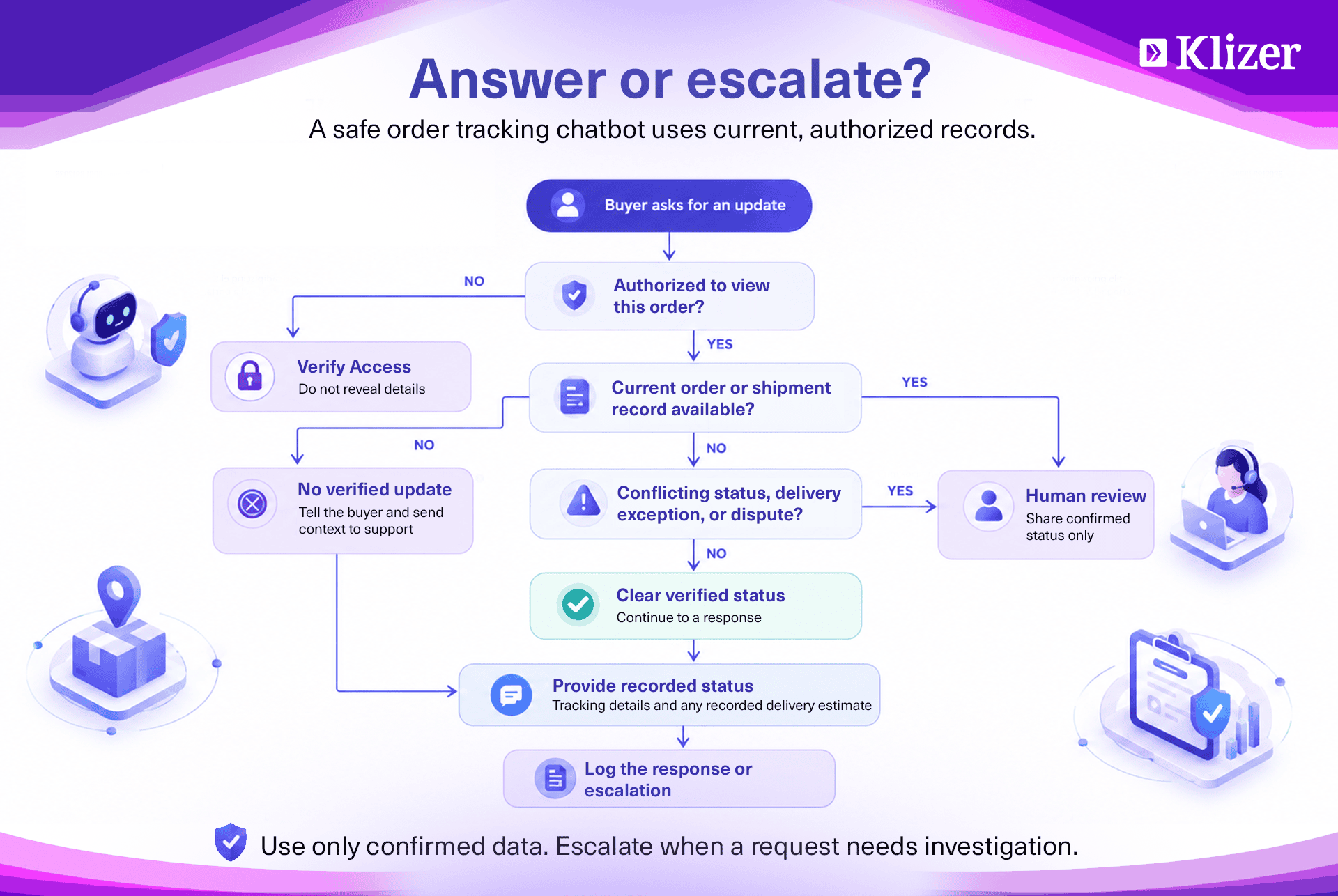
Businesses should define which cases require human review, what information should accompany an escalation, and how unresolved issues should be tracked. These may include missing data, damaged shipments, disputed deliveries, and other issues requiring investigation.
Monitoring and Maintenance
Businesses should monitor integration failures, response accuracy, unresolved requests, and escalation patterns. Regular maintenance keeps the chatbot aligned with changing APIs, carrier services, and business processes.
Conclusion
AI order tracking should be treated as an entry point to broader commerce modernization rather than as an isolated customer-service initiative. Within Klizer’s Connected Commerce approach, reliable order data moves through the Foundation, Storefront, and Integration layers so that Intelligence can support customer-facing updates. For manufacturers and distributors, the value of the chatbot depends on whether those underlying records stay accurate across the order lifecycle.
To discuss order tracking and connected customer support, talk to Klizer about conversational AI agents.
Frequently Asked Questions
1. Can an Order Tracking Chatbot Work Across Multiple Sales Channels?
Yes. A chatbot can support tracking across connected storefronts and sales channels when those systems provide the required order and shipment data.
2. How Can Businesses Measure an AI Order Tracking Chatbot’s Performance?
Businesses can monitor automated resolution rate, escalation rate, failed lookups, response accuracy, and tracking-related support volume.
3. Can AI Improve Order Tracking Beyond Customer Support?
Yes. Connected tracking data can reveal recurring fulfillment and delivery patterns that businesses can use for operational decision-making.
4. Can AI order tracking integrate with conversational commerce?
Yes. AI order tracking can connect with conversational commerce experiences, allowing customers to receive order-related assistance within messaging or chat-based purchasing journeys.
5. What role does generative AI play in modern eCommerce customer service?
Generative AI can interpret natural-language requests, maintain conversational context, and personalize responses across broader customer-service interactions beyond order tracking.