
The move to SaaS is considered to be a strategic shift for companies that want faster innovation, predictable costs, and a commerce platform that scales with demand. Adobe’s new Adobe Commerce SaaS offering (often referenced as Adobe Commerce as a Cloud Service / ACCS) positions Adobe’s enterprise commerce product as a fully managed, cloud-native service designed for both B2C and B2B needs.
Business leaders are migrating to Adobe Commerce cloud saas to drive measurable growth, reduce operational drag, and protect customer experience during peak moments. Let’s take a deeper look into this trend and see what’s encouraging this widespread adoption.
ON THIS PAGE
What is Adobe Commerce SaaS
Adobe Commerce SaaS is the version of Adobe Commerce made available as a fully managed, versionless cloud infrastructure. Adobe centrally managed the infrastructure, security patches, and platform updates while providing merchants with a composable commerce stack that integrates with Adobe Experience Cloud, content tools, and AI services.
This translates into better online experiences while serving the businesses. Your teams can get faster access to new features (especially when it comes to personalization and content), less dependency on in-house teams, and a platform that’s made to scale automatically during high-traffic events, without the traditional upgrade cycles and maintenance windows.
What are the benefits of Adobe Commerce Cloud SaaS for Businesses?
Adobe Commerce saas services offer some amazing business benefits that deliver in terms of long-term value. Here we have highlighted the most important ones:
1. Lower operational overhead, clearer TCO: Adobe handles upgrades, patching, and infrastructure. That reduces devops and hosting costs and shortens the cycle for platform improvements, freeing budget for customer-facing investments (merchandising, content, conversions).
2. Faster time to market: SaaS eliminates much of the “plumbing” work. New storefront capabilities, experiments, and integrations can roll out faster. This is more significant when seasons and campaigns have narrow windows to win.
3. Reliable performance during peaks: Commerce on SaaS can auto-scale. For Black Friday, new product launches, or regional spikes, that reliability protects revenue and customer trust.
4. Security and compliance handled centrally: Managed platforms patch known vulnerabilities and operate hardened controls. While no platform is immune to risk, the SaaS model reduces the burden on internal teams to maintain PCI, WAFs, and platform security.
5. Integrated content, personalization, and AI: One compelling business case for Adobe’s SaaS is the tighter integration with Adobe Experience Cloud capabilities such as content, DAM, and Adobe Sensei for personalization and AI-driven merchandising. That combination turns an ecommerce store into a content-driven revenue engine.
What makes Adobe Commerce SaaS different
Adobe Commerce saas helps businesses extend their capabilities beyond the traditional technology stack. It allows you to better use all the features and integration that come with Adobe Commerce, making it a better choice compared to legacy alternatives or generic SaaS ecommerce platforms.
1. Edge Delivery Services for fast, content-led storefronts: Adobe’s Edge Delivery Services cache and deliver content closer to customers, which cuts page load times and improves SEO and conversion metrics. This allows marketing teams to change content faster without long dev cycles. Faster storefronts translate directly into fewer abandoned carts, which translates into higher conversion rates.
2. Commerce Optimizer: Adobe Commerce Optimizer (ACO) lets merchants modernize their storefront and get many SaaS benefits without immediately re-architecting the entire backend. For businesses looking for a phased migration, ACO enables faster frontend performance and experimentation while you plan backend migration.
3. App Builder & API-first extensibility: Adobe’s App Builder provides a serverless framework for adding business logic and services in a way that’s aligned with a SaaS environment. For enterprises with integrations to ERP, PIM, or CRM, this reduces risk by encouraging loosely coupled, API-driven extensions.
4. Enterprise-grade composability & Adobe ecosystem: Unlike commodity SaaS platforms, Adobe’s offering is built for complex enterprises: multi-brand, multi-store, B2B features, catalog complexity, and deep content needs. If your ecommerce strategy relies heavily on content, personalization, or global operations, Adobe’s ecosystem is a strong fit.
5. Deep Adobe Ecosystem Integration: Because Adobe Commerce SaaS is part of the broader Adobe stack, the integration between commerce, content, analytics, customer data, and marketing becomes more seamless. This reduces friction for merchants who already use or plan to adopt other Adobe products.
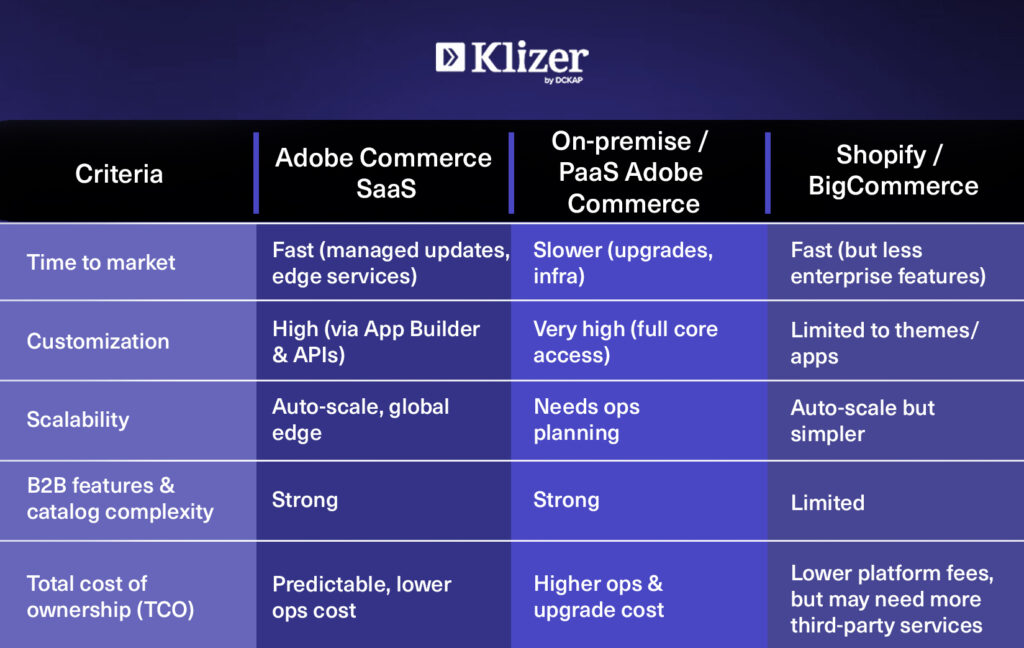
How Adobe Commerce SaaS Compares with Other Models
Read Next-Edge Delivery Services With Adobe Commerce
Migration Strategy and Best Practices
Implementing Adobe Commerce Cloud SaaS can be one of the best business decisions with the right approach. Let’s talk about the right implementation process.
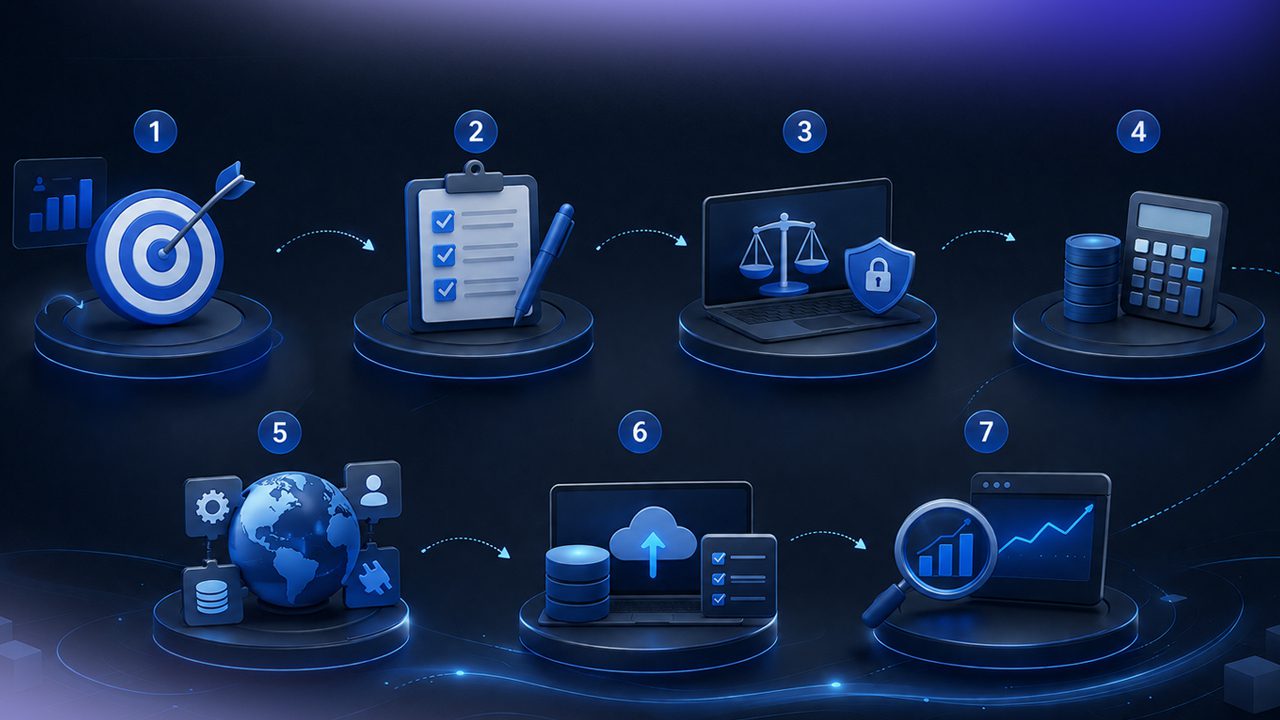
1. Start with an executive audit: Inventory your catalog complexity, custom extensions, integrations (ERP, PIM, OMS), and peak traffic demands. Understand which customizations are revenue-critical vs. “nice to have.” This will shape whether you do a phased or full migration. Opt for initial readiness assessment to prioritise features and scope.
2. Consider a phased approach (front-end first): Commerce Optimizer (ACO) or a headless storefront upgrade can deliver immediate UX and performance wins while you refactor back-end customizations. This reduces risk and lets marketing and merchandising teams start realizing benefits quickly.
3. Modularize and refactor custom code: Move from core overrides to API-driven microservices or App Builder functions. That lowers future migration cost and aligns with SaaS governance.
4. Map integrations early: ERP, tax engines, payment gateways, and fraud tools must be planned and tested in sandbox environments. Integration failures are a leading cause of migration delays and revenue disruption. Ensure early mapping and parallel testing for successful migration.
5. Run parallel validation and staged rollouts: Use blue/green or canary launches where possible. Validate checkout, high-volume SKUs, and geographically distributed performance. Perform robust load and acceptance testing to catch issues before cutover.
6. Plan for change management and ops readiness: Train merchandising, support and product teams on the new admin experience and deployment cadence. SaaS means Adobe can roll out features at a cadence your teams will need to adopt.
7. Negotiate the commercial and SLA terms up front: SaaS brings different commercial models (subscription tiers, usage-based components). Ensure SLAs, data residency, exit clauses and rollback provisions are clear in contracts.
How to decide if Adobe Commerce SaaS is right for your business
Here is how you can decide if you actually need the shift or not. Answer some critical questions:
- Do you need enterprise features (B2B, multi-store, complex pricing)? → Adobe is a strong fit.
- Do you want fastest possible time-to-market and lower operational overhead? → SaaS has clear benefits.
- Is your store heavily customized at the core? → Plan for refactoring; consider a phased approach (ACO).
- Will you rely on Adobe Experience Cloud (content, DAM, personalization)? → SaaS deep integration is a plus.
- Do you have strict data residency or unique compliance needs? → Confirm regional support in contract and roadmap.
If most answers are “yes”, check out the implementation roadmap and get started.
Read Next : What Is Adobe Commerce Catalog Service & How To Install It?
Final Words
Adobe Commerce SaaS helps businesses grow faster without being held back by heavy maintenance work that often takes attention away from customers. With edge delivery, App Builder flexibility, and Adobe’s content plus AI features, it’s a strong fit for large retailers and B2B companies with complex catalogs and global needs.If you’re considering Adobe Commerce SaaS services, the best way to start is with a readiness audit and a small pilot (like Commerce Optimizer or storefront modernization). This gives you quick results, lowers risk, and builds internal confidence.
With the right partner like Klizer, experienced in Adobe Commerce development and migration planning, SaaS can deliver both smoother operations and new paths for revenue growth.