
At 9:07 a.m. on a Monday, the team behind a traditional commerce website stared at their dashboard in disbelief. Traffic was up 42% thanks to a weekend influencer campaign, but conversions were flat. Pages were slow, search results felt irrelevant, and merchandising updates took hours to roll out. The business wasn’t losing customers because of bad products. It was losing them because of friction.
That week, they made a call: modernize using Adobe Commerce Optimizer (ACO). No full replatform. No multi-year migration project. Just a smarter layer on top of what they already had.
ON THIS PAGE
The situation before ACO
The storefront worked, technically. But it was held together with custom integrations, manual processes, and a lot of institutional patience.
Product data lived in four different places. Merchandising updates required dev involvement. Campaign pages took days to go live. And every time traffic spiked, someone’s weekend got ruined.
The teams weren’t aligned on solutions, but they agreed on the problem: the platform was slowing them down.
What ACO brought to the table
Adobe Commerce Optimizer isn’t a replatforming tool. It’s built to improve performance, catalog flexibility, and search relevance on top of your existing setup. For this team, three things moved the needle:
- Edge Delivery Services for page speed
- Composable Catalog Data Model for product data
- AI-driven discovery for search and merchandising
Page speed, finally solved
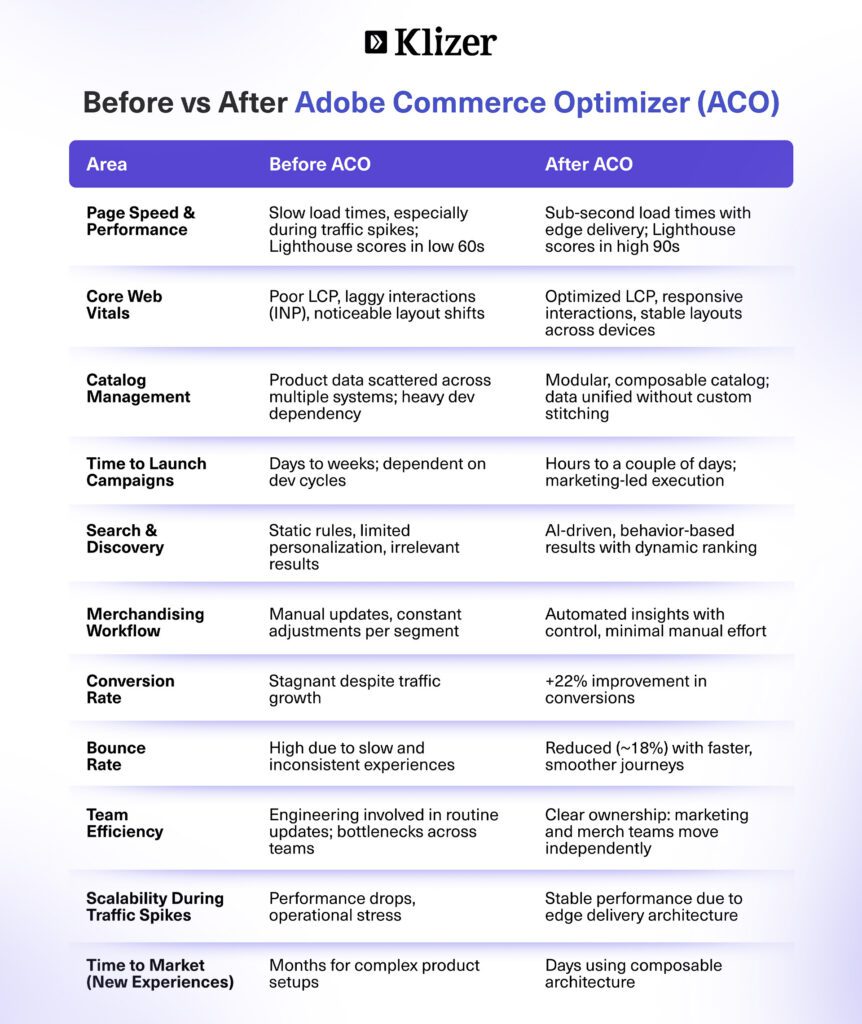
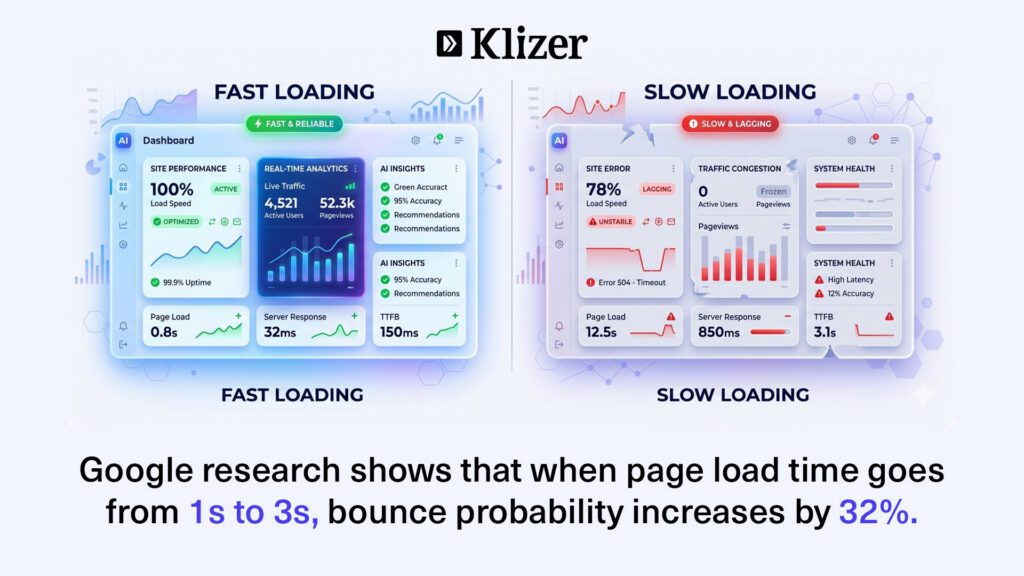
Slow pages were the most visible symptom of a deeper architectural problem. With Edge Delivery Services, pages were served from the edge rather than rendered through the full backend stack on every request. Lighthouse scores went from the low 60s to the high 90s. The next campaign launch saw pages load in under a second, bounce rates fell 18%, and SEO rankings started climbing within a few weeks.
More practically, marketing could update content without filing a ticket.
Cleaning up the catalog
The catalog situation was messier than it looked from the outside. Hardware data in one system, pricing rules in another, subscription metadata somewhere else entirely. Every new product type meant custom development work to stitch it together.
With CCDM, product data became modular. When the team needed to launch a subscription-based device bundle, they pulled hardware from the commerce platform, billing data from a SaaS system, and regional pricing from a separate rules engine, and it all surfaced as one clean product page. That kind of launch used to take months. This one took days.
Search that actually reflects intent
The last piece was search and merchandising. The team had rules set up, but they were static, and customer behavior isn’t. Someone searching “wireless headphones” who has previously bought studio monitors is probably not looking for the same thing as a first-time visitor.
ACO’s discovery layer learns from behavior over time. It adjusted rankings based on purchase history, surfaced in-stock items, and highlighted bundles that were actually converting. Merchandisers still had full control; they just weren’t doing it manually for every segment.
The results
Search conversions went up. So did the average order value.
Where things stood six months in
Conversion rate was up 22%. Campaign launches went from weeks to a couple of days. Customer satisfaction hit a two-year high.
But the less obvious win was this: the engineering team stopped getting pulled into content updates, merchandisers stopped waiting on deployments, and marketing stopped building campaigns around what the platform could handle instead of what customers actually needed.
That shift is harder to put in a dashboard, but it’s the one that sticks.
The results showed up in Core Web Vitals, too
Speed improvements didn’t just make the site feel faster; they showed up in Core Web Vitals, the metrics Google uses to evaluate real user experience. Largest Contentful Paint (LCP) dropped well below recommended thresholds, interactions became more responsive with improved Interaction to Next Paint (INP), and layout shifts were minimized.
Because Adobe Commerce Optimizer serves content closer to the user through edge delivery, these improvements were consistent, even during traffic spikes. That stability matters, not just for SEO rankings, but for conversion reliability when it counts most.
Is ACO the right move for your business?
It depends on your setup. If you’re running a commerce platform that works but keeps getting in the way, ACO is worth a serious look. If you’re considering a full replatform, it might buy you time to do it properly instead of under pressure
Work with an Adobe Commerce Implementation Partner to eliminate friction and unlock real performance gains, without rebuilding your entire platform.