

If you are a Shopify merchant, you’d agree that you are juggling a lot of things. Content updates, customer queries, returns, stock issues, promotions, and whatnot. Managing all of this manually means one small delay can break your entire flow.
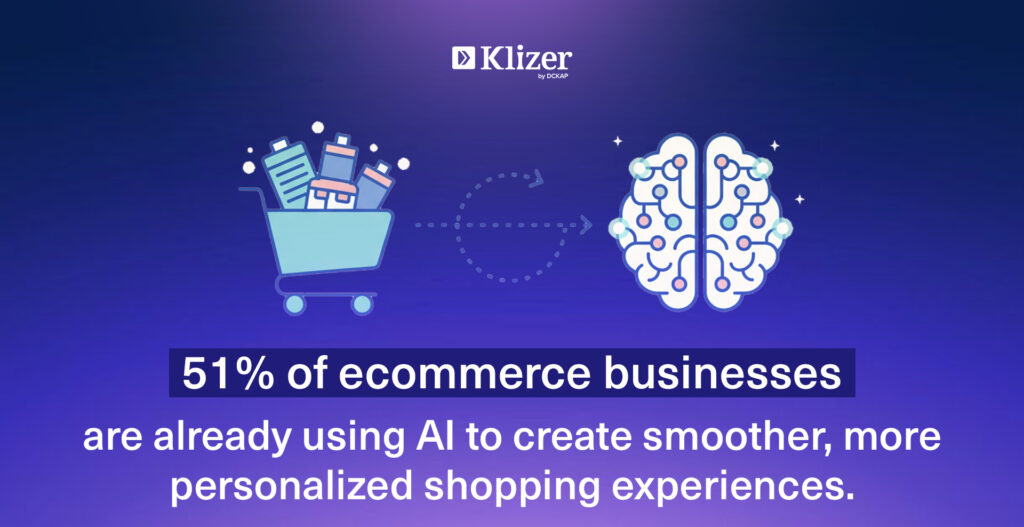
Thankfully, AI can change that and offer you a way to keep your store faster, more reliable, and more profitable without adding more people. Shopify AI tools now make it possible to predict trends, personalize every touchpoint, and fix repetitive problems automatically.
In fact, according to Deloitte, over 60% of ecommerce businesses using AI have already seen better conversions and faster operations.
Here’s how Shopify stores are actually using AI to improve performance, and do more than just try.
ON THIS PAGE
Benefits of Integrating AI in Shopify
1. Personalized product recommendations
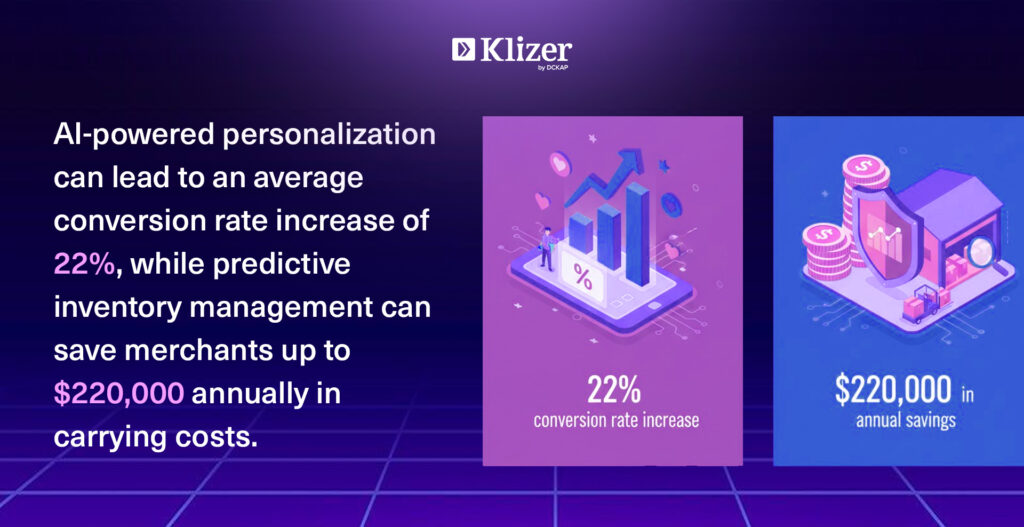
Generic product suggestions don’t help with conversions. AI, combined with Shopify, analyzes browsing behavior, purchase history, and the intent of the shopper. It shows products your shoppers are more likely to buy, which convert better.
This is how it works:
- Show AI-based product suggestions on home, category, and checkout pages.
- Highlight complementary or trending items automatically.
- Send follow-up emails for products viewed but not purchased.
This reduces abandoned carts and improves AOV, giving better returns on investment.
2. AI website builders
Building a store from scratch can take weeks. AI website builders can now generate Shopify stores within hours, including all the essential features, layout, content, and image ideas.
All you need to do is:
- Describe your brand and products for AI to build pages and copy.
- Create and test multiple layouts fast.
- Automate routine content and focus on optimization.
This helps new businesses go live faster, and existing ones test fresh campaigns quickly.
3. Customer support
Customers don’t wait anymore. They are always looking for answers the moment they ask. However, building a 24/7 support team isn’t realistic or profitable.
That’s where AI chatbots in Shopify can help your business. They handle FAQs, orders, and returns without manual input. They can answer common queries or pass complex ones to support teams, or even suggest add-ons while chatting.
This results in a lower number of tickets, quicker replies, and more satisfied customers.
4. Inventory management and demand forecasting
Stock issues break trust. Overstock blocks capital; stockouts lose sales. AI uses patterns, marketing signals, and seasonality to predict demand.
Merchants can integrate AI inventory tools directly into Shopify, set reorder rules for high-demand items, and review data trends to prepare for seasonal spikes.
This keeps operations balanced and predictable.
5. Optimized marketing campaigns
Random targeting wastes ad spend. AI reads audience behavior to build precise segments. It helps deliver relevant content, not spam.
How to apply it:
- Use AI recommendations in emails, SMS, and ads.
- Schedule campaigns when buyers are most active.
- Personalize promotions based on browsing or purchase data.
This translates into better CTRs, higher ROI, and lower churn.
6. Predictive analytics for repeat purchases
AI helps identify who’s likely to churn and when. It predicts when to engage a buyer again.
Stores use it to:
- Send automated post-purchase follow-ups.
- Recommend related items based on previous orders.
- Offer discounts that expire soon to encourage repeat buys.
This keeps customers active without constant manual tracking.
7. Automated content creation with generative AI
Writing descriptions and blogs eats time. Shopify’s generative AI can create product copy, SEO text, and email content within minutes.
What teams do:
- Auto-generate headlines, meta tags, and page content.
- Localize text for different regions.
- Refresh old listings without rewriting from scratch.
This keeps stores updated and consistent without heavy effort.
8. Fraud detection and secure transactions
Fraud drains revenue quietly. AI tools spot suspicious activity instantly — chargeback patterns, location mismatches, or duplicate payments.
Merchants can:
- Flag and hold unusual orders for review.
- Track high-risk transactions in real time.
- Combine AI alerts with manual checks for sensitive orders.
This improves customer trust and keeps chargebacks in control.
9. Personalized pricing and smart discounts
AI tracks pricing patterns, customer value, and competition. It helps merchants adjust prices or discounts dynamically.
How to use it:
- Automate personalized offers for loyal or price-sensitive buyers.
- Adjust prices based on demand or market conditions.
- Review insights weekly to protect margins.
It keeps sales high and revenue stable without constant manual tweaking.
Also read- Shopify Analytics: A Definitive Guide [Tools + FAQs]
10. Scale without expanding your team
AI takes over repetitive work — catalog updates, replies, tagging, analytics. You can scale without new hires.
How to start:
- Automate small, repeatable tasks first.
- Let AI handle surge hours or sale events.
- Free your team to focus on growth and creative work.
This makes scaling sustainable and cost-efficient.
Conclusion
AI in Shopify is the backbone of how modern stores operate. It takes away manual guesswork, connects data across your storefront, and keeps your operations steady even when sales spike.
Merchants using Shopify AI tools are already seeing how automation changes the game in terms of faster site updates, cleaner workflows, and smarter decisions.
The real benefit isn’t just speed. It’s control. AI lets you understand what your buyers want, when they’re likely to purchase, and how to reach them with the right offer. It turns your store from reactive to proactive, predicting issues before they happen.
Whether it’s Shopify AI Assistant handling support, Shopify Generative AI creating content, or AI website builders speeding up new launches, every layer adds efficiency and accuracy.If you’re running a Shopify store and still managing everything manually, this is the right time to start. The stores that adapt to AI today will set the standard for how ecommerce runs tomorrow.
If you have questions about Shopify development or AI solutions for ecommerce, we’re here to help!