
Taking your brick-and-mortar store online is not easy task. It takes not just a lot of investment, but also a lot of resources. You need the right expertise to rely on, a team that can handle everything from front-end to back-end to integrations, and a lot more.
While off-the-shelf ecommerce platforms like Shopify, WooCommerce, or Magento can get you started quickly, they often fall short when it comes to unique business requirements, scalability, and performance. That’s where custom ecommerce development comes in.
Custom ecommerce solutions are tailored to your business needs, giving you the flexibility, control, and competitive edge you need to grow your online store efficiently.
However, there are two ways to go about it: you can either choose a freelance or a custom ecommerce development company. This blog explores both aspects and explains why an ecommerce development company is always the best option for you.
ON THIS PAGE
What is custom ecommerce development?
Custom ecommerce development is the process of building an online store from scratch to meet the specific requirements of your business. Unlike generic solutions, custom ecommerce software ensures that every feature, including product catalog management and payment gateways to user interface and backend processes, is designed around your business model.
This approach allows you to:
- Have full control over the design, user experience, and functionality
- Implement unique features that give your business a competitive advantage
- Scale seamlessly as your business grows
- Ensure better integration with third-party tools and internal systems
What are the benefits of custom ecommerce development?
Custom ecommerce development offers far more flexibility, a better shopping experience, and of course, the ability for business owners to build the ecommerce solution that’s right for their business. Let’s get into the details of these benefits:
- Tailored Experience: With custom development, your store is built around what your business actually needs. You get to shape the shopping journey exactly how you want, from navigation and search all the way to checkout and payments. Everything can be set up to fit your audience and boost conversions.
- Scalability & Flexibility: As your business grows, your platform grows with it. You can add new features, handle more traffic, or plug in newer tech like AI, AR, or analytics whenever you’re ready. You don’t have to buy into stuff you don’t need right now. Instead, you can start small and scale as things pick up.
- Performance & Security: Custom builds usually run faster and safer because they’re made to fit your business. You don’t get weighed down by random plugins or extra code that slow things down or create risks.
- Integrations: Whether it’s ERP, CRM, payment gateways, or shipping tools, a custom ecommerce setup connects smoothly and matches the way your business works.
- Branding: A custom setup lets you show off your identity without having to settle for boring templates that don’t meet your brand’s requirements.
- Control & Ownership: With custom ecommerce, you fully own your data, your code, and your features. You decide what stays, what goes, and you’re not stuck with third-party limitations.
- Visibility: SEO can be baked in right from the start, so your site structure, speed, and rankings are set up for success from day one.
Recommended Read: eCommerce Migration: A Step-by-Step Guide
Freelance or custom development company: What to prefer and why
When considering custom ecommerce development, businesses often face a choice: hire a freelancer or partner with a custom development company. Here’s a breakdown:
| Aspect | Freelancer | Custom Development Company |
| Expertise | Limited to individual skills | Access to a team with designers, developers, testers, and project managers |
| Reliability | Risk of delays if unavailable | Structured timelines, project management, and accountability |
| Maintenance | Hard to ensure long-term support | Ongoing support, updates, and troubleshooting included |
| Scalability | Challenging to scale large projects | Can handle complex, large-scale custom ecommerce development projects |
| Quality Assurance | Limited testing resources | Dedicated QA and testing for a seamless experience |
While freelancers might work for small projects or minor customizations, a custom ecommerce development company is generally the better choice for serious businesses looking for long-term growth, scalability, and professional support.
Recommended Read: How Much Does It Cost To Build An Ecommerce Website?
How to choose the right custom ecommerce development company
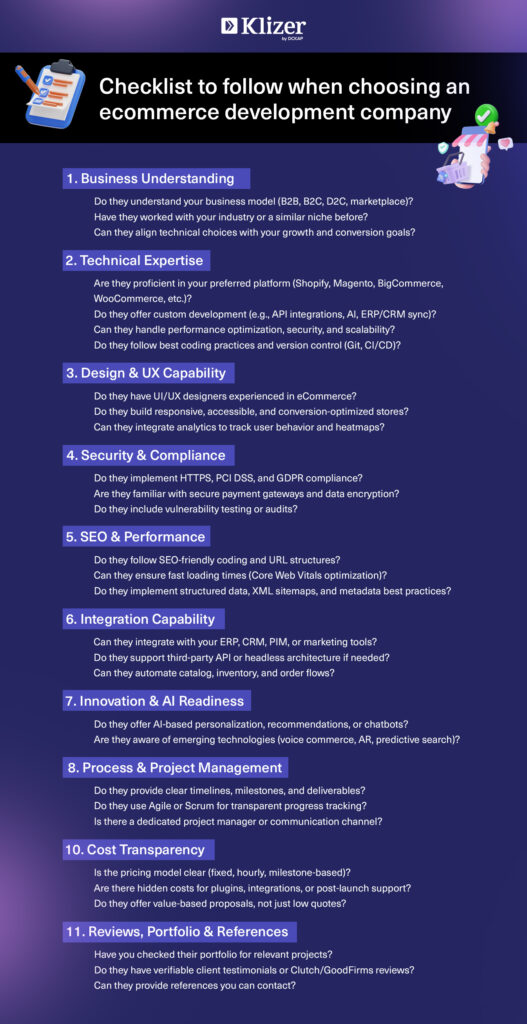
Selecting the right partner is critical for the success of your custom ecommerce project. Here’s a guide:
- Check Experience and Portfolio: Look for companies that have experience in building custom ecommerce software for businesses in your industry. Review their portfolio to see the complexity and quality of projects they’ve delivered.
- Assess Technical Expertise: Ensure the team is proficient in technologies that align with your business goals, whether it’s Magento, Shopify Plus, WooCommerce, or fully custom ecommerce development frameworks.
- Understand Their Process: A professional company should have a structured process covering planning, design, development, testing, and deployment. Transparency and communication are key.
- Look for Post-Launch Support: Your custom ecommerce store isn’t done after launch. A good company provides ongoing support, maintenance, and performance optimization.
- Read Client Reviews and Testimonials: Real feedback from previous clients can give insight into their reliability, communication, and delivery standards.
- Evaluate Cost vs Value: While custom ecommerce development may seem costlier upfront than a freelancer or template solution, the ROI through increased conversions, better user experience, and scalability makes it worthwhile.
Conclusion
Custom ecommerce development is not just about building a website—it’s about creating a digital experience that reflects your brand, meets your business needs, and scales with your growth. Partnering with a reliable custom ecommerce development company ensures you get expertise, support, and results that a freelancer or off-the-shelf solution may not provide.
Investing in custom Enterprise ecommerce solutions or software today can save headaches, improve user experience, and maximize ROI for years to come.