

Your commerce platform is powerful. Your APIs are well designed. Your product data is clean. And yet, your storefront still feels slow.
That is one of the biggest mistakes businesses make when moving to headless commerce. They focus heavily on choosing the right commerce backend, CMS, APIs, and integrations, but treat the frontend as an afterthought.
In headless commerce, that is a problem.
Your frontend is where customers actually experience your brand. It controls how quickly pages load, how smoothly shoppers browse products, how search works, how personalized experiences feel, and how easily you can introduce new digital experiences. And performance is not just a technical concern.
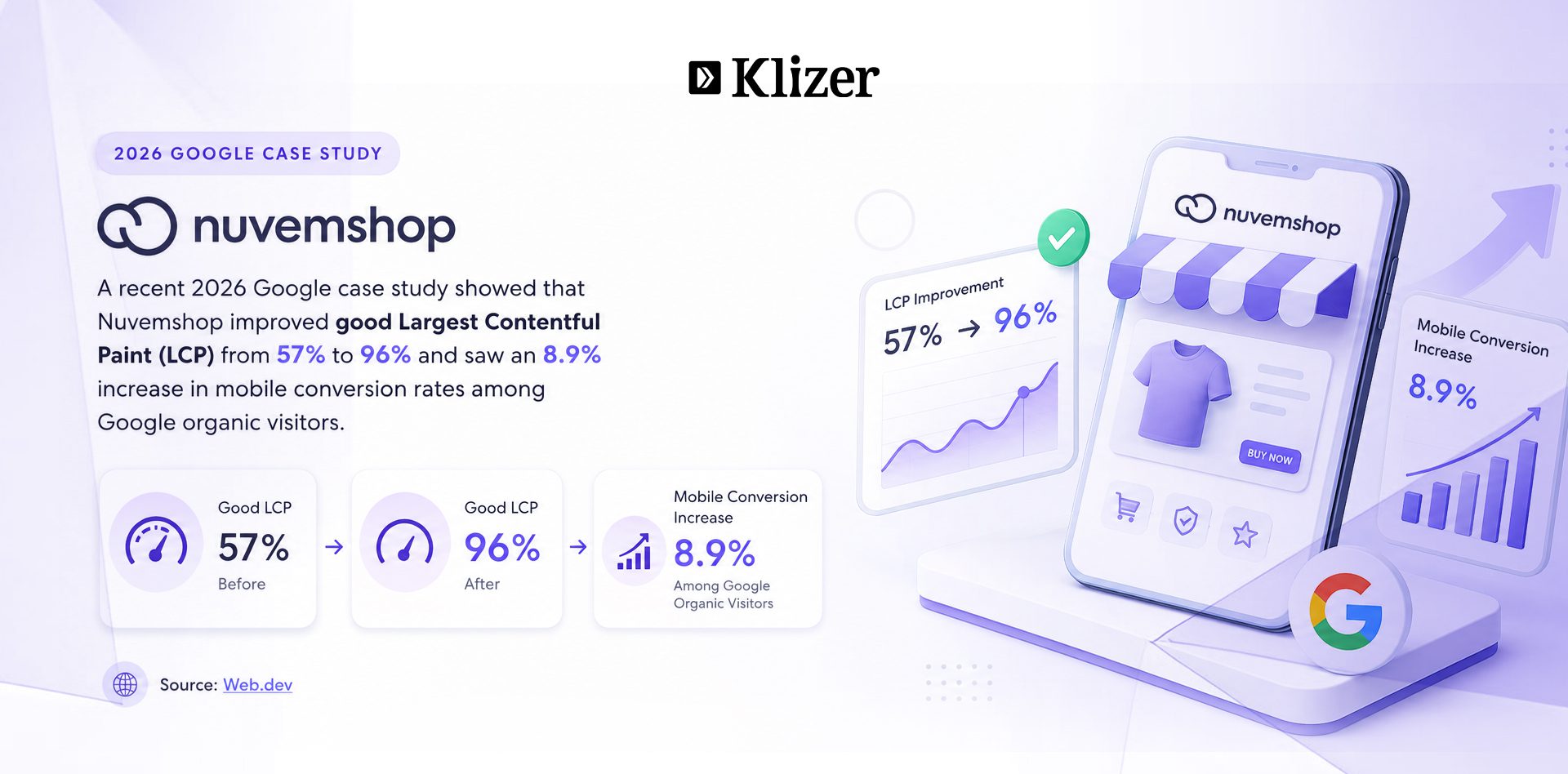
So, which frontend framework should you choose for headless commerce?
The right choice depends on your commerce platform, team skills, performance goals, content strategy, customer experience, and how much flexibility you actually need.
ON THIS PAGE
Understanding a Frontend Framework in Headless Commerce
In a traditional ecommerce setup, your commerce platform usually controls both the backend and the storefront.
Headless commerce separates the two.
Your commerce platform manages things like:
- Products
- Pricing
- Inventory
- Customers
- Cart
- Orders
- Checkout
The frontend framework controls what shoppers see and interact with.
It connects to the commerce backend through APIs and gives your team more control over the customer experience.
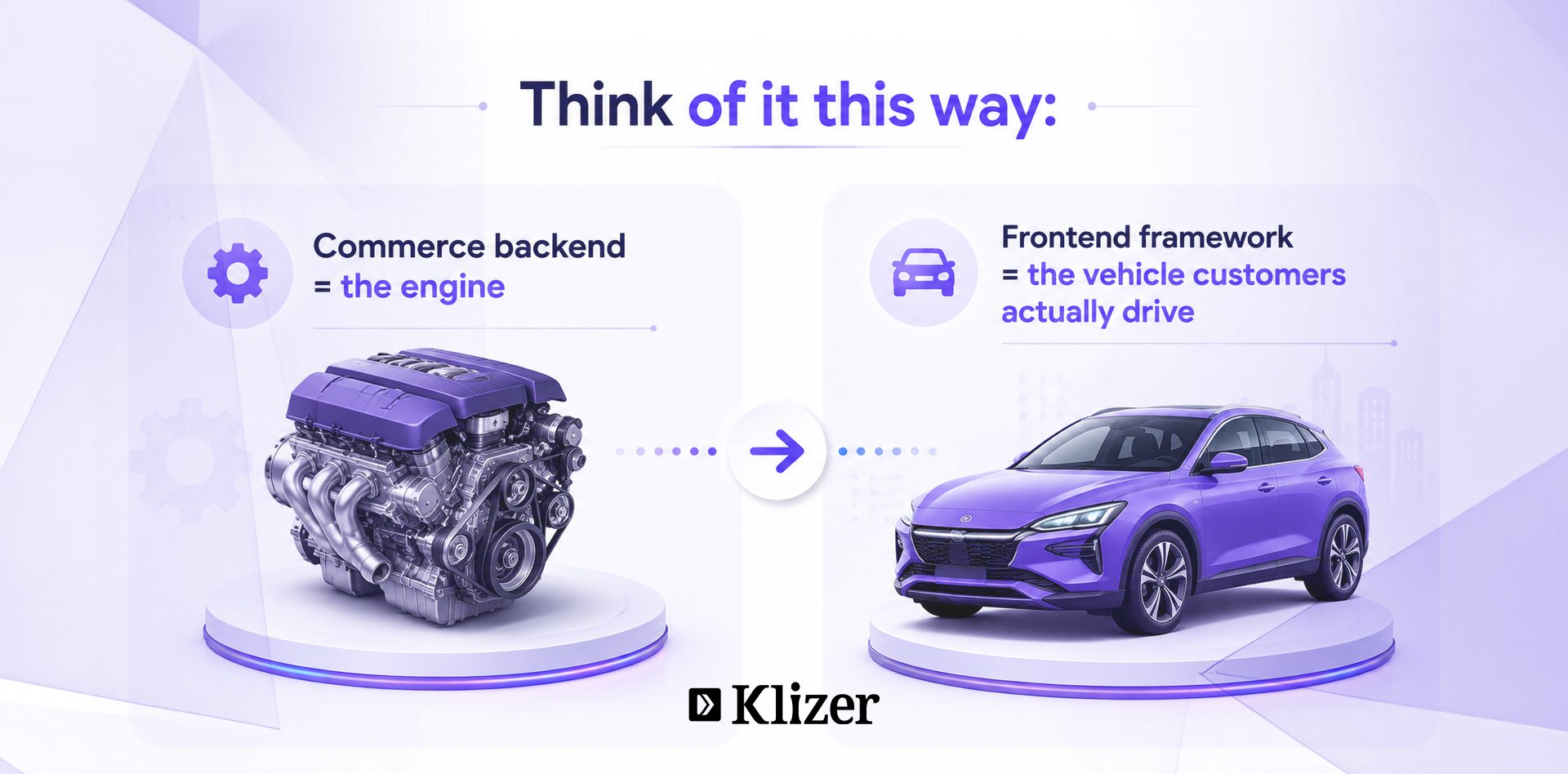
That is why choosing a frontend framework matters so much in headless commerce.
Why Your Frontend Framework Matters
Headless commerce gives you freedom, but freedom also means more decisions.
Your frontend framework influences:
1. Performance
How quickly can your storefront render products, categories, images, search results, and personalized content?
This matters because every second counts.
Akamai’s research has found that even a 100-millisecond delay can reduce conversion rates by up to 7%. Its research also reports that a two-second delay can increase bounce rates by up to 103%.
2. SEO
A headless storefront still needs to be discoverable. Your framework should make it easier to manage:
- Server-side rendering
- Static generation
- Metadata
- Structured data
- Canonical URLs
- Sitemap generation
- Page speed
- Crawlable content
3. Developer Experience
Your developers will live with this framework for years.
A framework with a strong ecosystem, good documentation, reusable components, and active development can reduce development and maintenance effort.
4. Scalability
Your storefront should not struggle when traffic increases during a product launch, seasonal sale, or marketing campaign.
Modern frameworks can support server-side rendering, caching, edge delivery, static generation, and other approaches that help handle traffic efficiently.
5. Flexibility
This is one of the biggest reasons companies go headless in the first place.
You may want a highly interactive product configurator today and an AI-powered shopping experience tomorrow.
Your frontend should give you room to build those experiences without constantly fighting the platform.
5 Best Frontend Frameworks for Headless Commerce
1. Next.js
Best for: Enterprise businesses and complex commerce experiences
Next.js is one of the most popular choices for headless commerce.
It is built on React and gives developers a lot of control over how a storefront is built and delivered.
You can use Next.js with different commerce platforms and services. This makes it a good option if you do not want your frontend tied to one commerce platform.
For example, imagine a B2B distributor with thousands of products.
Its storefront may need to support:
- Customer-specific pricing
- Different product catalogs
- Real-time inventory
- Advanced search
- Product configuration
- Multiple regions
- Multiple languages
- ERP integrations
- Personalized recommendations
Next.js gives developers the flexibility to build these experiences while connecting the storefront to different backend systems.
It also supports different rendering approaches. Developers can decide what should be rendered on the server, what should be generated ahead of time, and what needs to happen in the browser.
Why choose Next.js?
- Large React ecosystem
- Strong SEO capabilities
- Flexible architecture
- Good performance options
- Works with many commerce platforms
- Suitable for complex storefronts
- Large developer community
What should you consider?
The flexibility of Next.js can also make projects more complex.
Your team needs to make the right decisions around caching, rendering, data fetching, and third-party scripts.
A poorly designed Next.js storefront can still be slow.
Best fit: Businesses that need a highly flexible storefront and have a strong development team.
2. Shopify Hydrogen
Best for: Shopify and Shopify Plus brands
If Shopify is your commerce platform, Hydrogen is one of the most natural options to consider.
Hydrogen is Shopify’s framework for building custom headless storefronts. It is built with React and works with Shopify’s Storefront API.
Instead of building the entire commerce experience from scratch, developers can use Shopify’s APIs and Hydrogen’s tools to build a custom storefront.
This can be useful for brands that have outgrown the standard Shopify theme experience.
Think about a fashion brand that wants:
- Highly visual product pages
- Custom product discovery
- Advanced filtering
- Personalized recommendations
- Interactive shopping experiences
- Custom landing pages
- Faster mobile experiences
Hydrogen gives the development team more control over how these experiences work.
Shopify also offers Oxygen, its hosting platform for Hydrogen storefronts.
Why choose Hydrogen?
- Built for Shopify
- Uses React
- Works with Shopify’s Storefront API
- Good performance capabilities
- Strong Shopify ecosystem
- Good option for custom Shopify experiences
Shopify is also adding more capabilities around AI and agent-based shopping to its storefront ecosystem, which makes the flexibility of headless architecture even more useful for brands planning ahead.
What should you consider?
Hydrogen makes the most sense when Shopify is at the center of your commerce stack.
If you need to connect several commerce platforms or build a more platform-independent architecture, Next.js may offer more flexibility.
Best fit: Shopify and Shopify Plus brands that want more control over their storefront.
3. Nuxt
Best for: Businesses with Vue development teams
Not every development team uses React.
If your team works with Vue, Nuxt is worth considering.
Nuxt is a Vue framework that supports server-side rendering, static generation, routing, and other features needed to build modern web applications.
It can work well for ecommerce storefronts that need good performance and a flexible frontend.
Nuxt also has ecommerce integrations for platforms such as Shopify, Medusa, and Shopware.
The framework continues to evolve as well. Nuxt 4.5, released in July 2026, introduced several updates, including improvements to its build and performance capabilities.
Why choose Nuxt?
- Strong Vue ecosystem
- Server-side rendering
- Static generation
- Good performance options
- Flexible architecture
- Good developer experience
- Ecommerce integrations available
What should you consider?
The React and Next.js ecosystem is still larger for enterprise headless commerce.
That can matter when you are hiring developers or looking for third-party tools and integrations.
Best fit: Businesses with experienced Vue teams that want a modern headless storefront.
4. SvelteKit
Best for: Lightweight and interactive storefronts
SvelteKit takes a different approach to frontend development.
One of its strengths is reducing the amount of JavaScript that needs to run in the browser.
That can help create fast and responsive websites.
This can be useful for brands that want highly interactive storefronts without sending a large amount of code to the customer’s browser.
For example, a furniture brand could build interactive product configurators where customers change colors, materials, sizes, or other product options.
A fashion brand could use interactive product pages with animations and dynamic recommendations.
SvelteKit can be a good option for these experiences.
Why choose SvelteKit?
- Lightweight frontend
- Strong performance potential
- Good for interactive experiences
- Modern development experience
- Flexible rendering options
What should you consider?
SvelteKit has a smaller ecosystem than React and Next.js.
That does not make it a bad choice. It simply means your team should check the available ecommerce tools, integrations, and developer talent before committing to it.
Best fit: Businesses with Svelte experience that want a lightweight and highly interactive storefront.
5. Commerce-Specific Frontend Solutions
You do not always need to build everything yourself.
Some commerce platforms now offer frontend solutions designed specifically for headless commerce.
BigCommerce, for example, offers Catalyst, a headless storefront solution built with Next.js. It works with BigCommerce’s GraphQL Storefront API and provides tools for building modern storefronts.
Commercetools also offers a frontend solution based on Next.js. It includes tools for building storefronts, reusable components, content management, and commerce experiences.
This approach can save development time because your team does not have to build every commerce feature from the ground up.
Why choose a commerce-specific solution?
- Faster starting point
- Prebuilt commerce capabilities
- Easier platform integration
- Reusable components
- Less foundational development work
What should you consider?
You may have less freedom compared with building a completely custom frontend.
So, if your business needs a very unique customer experience, a custom framework approach may be better.
Best fit: Businesses that want the benefits of headless commerce without building every part of the storefront themselves.
| Recommended Read: Headless Commerce for eCommerce: ROI, Cost & Architecture Guide |
Frontend Framework Comparison
| Framework | Best For | Main Strength | Consider If |
| Next.js | Enterprise commerce | Flexibility | You need a custom and scalable storefront |
| Hydrogen | Shopify | Shopify integration | Shopify is your main commerce platform |
| Nuxt | Vue teams | Developer experience | Your team already works with Vue |
| SvelteKit | Interactive storefronts | Lightweight frontend | Performance is a major priority |
| Commerce-specific solutions | Faster implementations | Prebuilt commerce features | You want to reduce development effort |
How to Choose the Right Frontend Framework?
The most popular framework is not automatically the right one for your business. Start with your requirements and then evaluate the technology.
Consider Your Commerce Platform
Your commerce platform should be one of the first things you look at. Shopify businesses may find Hydrogen a natural fit, while BigCommerce businesses can consider Catalyst.
If you work across multiple platforms or want a more independent architecture, Next.js may offer more flexibility.
Consider Your Team
Choose a framework your developers can confidently build and maintain. A framework that looks impressive but requires skills your team does not have can create unnecessary development and maintenance challenges.
Consider Your Customer Experience
Think about what customers need from the storefront. If you require account-specific pricing, real-time inventory, advanced search, product configuration, or personalization, you may need a more flexible frontend.
Consider Your Future Plans
Your storefront will likely evolve. AI-powered search, personalization, conversational shopping, mobile experiences, and agentic commerce could all become part of your roadmap.
Choose a framework that gives you room to add these experiences without rebuilding your entire storefront.
Headless Commerce Is More Than the Frontend
Choosing a frontend framework is important, but it is only one part of a headless commerce architecture.
Your storefront needs to work with your commerce platform, ERP, PIM, CMS, search, CRM, and other business systems. If these systems are poorly connected, even the best frontend framework will struggle to deliver a good customer experience.
For example, a B2B distributor may use Next.js for its storefront, but if pricing comes from an outdated export and inventory is updated only once a day, customers can still see incorrect information.
The issue is not the framework. It is the architecture behind it.
That is why businesses need to think about headless commerce as a complete ecosystem rather than simply replacing the traditional frontend.
| Recommended Read: Benefits of Headless Commerce for B2B Brands |
Conclusion
The right frontend framework can improve your storefront’s performance, flexibility, and customer experience. Next.js, Shopify Hydrogen, Nuxt, SvelteKit, and commerce-specific solutions each have their strengths, but the right choice depends on your platform, team, integrations, and business goals.
Choosing the right technology is only the first step. You also need the right headless commerce development partner like Klizer to connect your storefront with the systems that power your business.
At Klizer, our Headless Commerce Services cover strategy, architecture, storefront development, integrations, and performance across Adobe Commerce, Shopify, and BigCommerce.
Planning a headless migration or a new storefront? Get in touch with us to find the right frontend framework and approach for your business.